


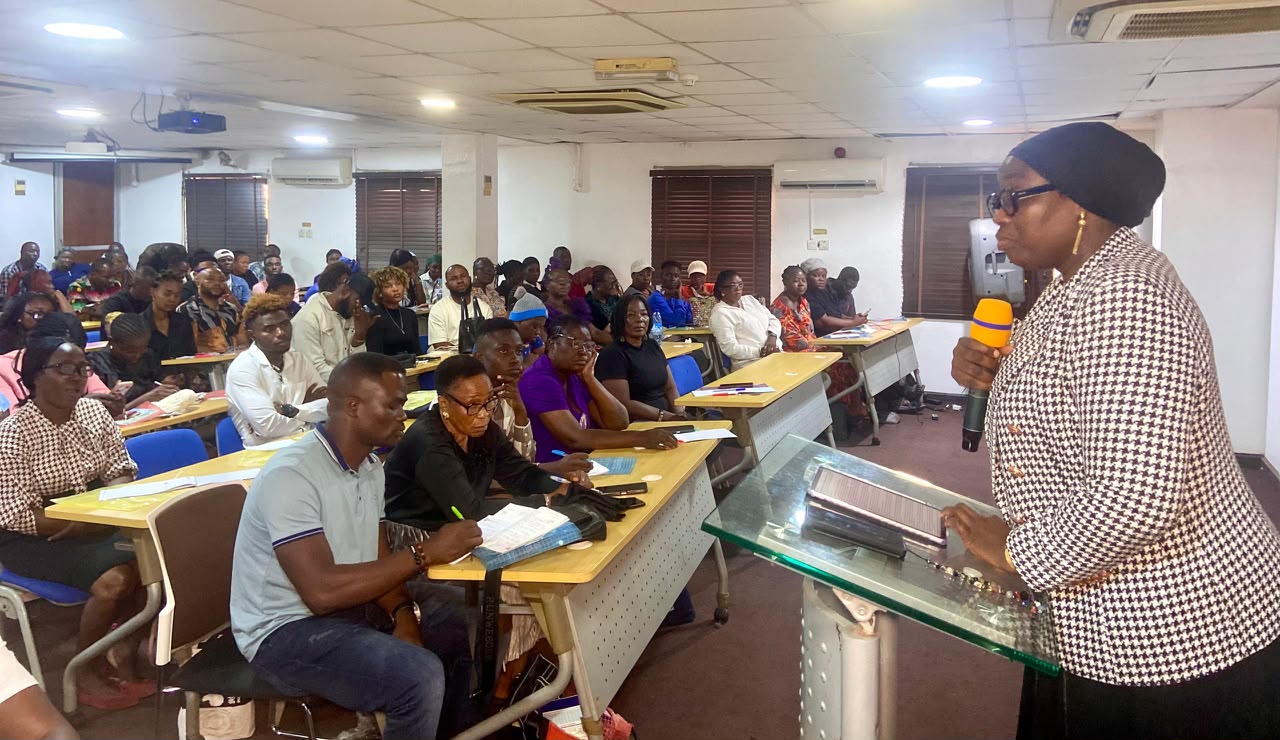
The Lagos State AIDS Control Agency (LSACA) has stepped up efforts to strengthen community-led HIV interventions by training Peer Educators and community representatives on HIV prevention, testing, treatment literacy and linkage to care.
The Chief Executive Officer of LSACA, Dr Folakemi Animashaun, stated this on Tuesday while delivering her welcome address at a two-day Peer Educator Capacity Strengthening Meeting held at the Lagos Chamber of Commerce and Industry, Ikeja.
In a statement by the Director, Public Affairs, LSACA, Adekunbi Bakare, Animashaun described Peer Educators as a critical link between communities and available HIV services.
She said effective HIV programmes must extend beyond health facilities to the communities where people live, work and make decisions about their health.
According to her, Peer Educators play important roles in providing accurate HIV information, addressing misconceptions, promoting HIV prevention and testing, supporting referrals and linkage to care, and encouraging treatment adherence and retention.
Animashaun said the two-day engagement was designed to strengthen and standardise participants’ practical knowledge and skills in HIV prevention, HIV testing services, treatment literacy, referral and linkage pathways, adherence support, community mobilisation, confidentiality, documentation and effective communication.
She noted that the diversity of participants provided an opportunity to strengthen individual capacities, improve coordination among community structures and deepen understanding of the barriers faced by people living with HIV and populations disproportionately affected by the virus.
Animashaun urged participants to share their field experiences, identify persistent barriers to service access and develop practical solutions to improve community-level interventions, referral mechanisms and service delivery.
She also stressed the importance of listening to community networks and Peer Educators, saying their experiences and feedback were essential to effective programme planning, implementation and continuous improvement.
The LSACA chief executive placed particular emphasis on adolescents and young people living with HIV, noting that peer support could help them better understand their treatment, remain engaged in care, overcome stigma and psychosocial challenges, and achieve viral suppression.
“Peer Educators are a critical link between communities and available HIV services. Your work helps to ensure that accurate information reaches people where they live, work and make decisions about their health,” Animashaun said.
She urged Peer Educators to maintain professionalism, empathy, respect and confidentiality in all interactions, while recognising the limits of their roles and referring clinical or specialised concerns to qualified service providers.
“Your role requires professionalism, empathy, respect and confidentiality. Where an issue falls outside your scope, the appropriate action is to refer the individual to a qualified service provider,” she said.
Animashaun commended the Lagos State Government, under the leadership of Governor Babajide Olusola Sanwo-Olu, for its continued commitment to health-system strengthening and improved access to quality healthcare services.
She also appreciated implementing partners, community networks, civil society organisations, Peer Educators and other stakeholders for their contributions to strengthening the HIV response in Lagos State.
She called on participants to apply the knowledge gained from the training to strengthen community engagement, improve referral systems and support better access to HIV services across the state.
