


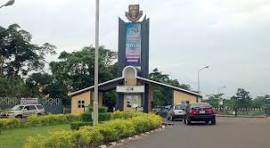
Students of Obafemi Awolowo University, Ile-Ife, have declared a 72-hour lecture boycott in protest against what they describe as an inefficient and poorly executed campus transportation system tied to recently introduced vehicles.
The boycott, scheduled from Tuesday, April 14 to Thursday, April 16, 2026, was announced by the Students’ Union Government (SUG) following a congress held on April 9 and subsequent leadership consultations.
In a statement jointly signed by the SUG President, Adelani David, and Secretary-General, Habeeb Oke, the union said the decision was driven by growing frustration over persistent mobility challenges disrupting academic and daily activities.
“The union shall embark on a total 72-hour lecture boycott starting from Tuesday, 14th April 2026, to Thursday, 16th April 2026. All academic activities are to be boycotted throughout this period,” the statement read.
The union accused the new transport arrangement of worsening commuting conditions across campus, citing a shortage of vehicles, overcrowding, long waiting times, and limited route coverage.
Students noted that the situation has been particularly severe for those residing off-campus, who now depend on fewer and more expensive transport alternatives outside university control.
Despite a series of engagements with the university management, the union said there has been no immediate relief, with authorities maintaining that the system is still in a transitional “teething phase.”
Among key demands, the students called for the deployment of additional vehicles to cater to the university’s population of over 35,000, a temporary return to the previous transport system pending improvements, and greater consultation with student representatives before further policy decisions are implemented.
They also advocated a more inclusive, hybrid transport model that accommodates both campus and adjoining community mobility needs.
The union warned that failure to address these concerns within the boycott period could trigger an escalation.
“The leadership shall review the situation at the end of the 72-hour boycott. Further actions such as a possible mass protest/march shall be considered if the management fails to address the demands satisfactorily within this period,” it added.
The controversy follows the donation of 80 compressed natural gas (CNG) buses and tricycles by Nigeria’s First Lady, Oluremi Tinubu, aimed at modernising campus transportation and easing mobility for students and staff.
Subsequently, the university management restricted intra-campus transportation to the donated vehicles, an initiative initially welcomed but now criticised by students over operational shortcomings.
In earlier reactions, the Students’ Union acknowledged the intervention but pointed to implementation gaps, including long queues, delays, and insufficient fleet capacity, particularly during peak periods.
The union also raised concerns over the displacement of commercial transport operators who previously served parts of the campus, arguing that their removal has further constrained mobility.
University authorities, however, have reportedly assured students that the current challenges are temporary and that additional buses will be introduced in the coming months to improve efficiency.
Despite these assurances, students insist that conditions remain untenable, prompting the lecture boycott as a pressure tactic to compel urgent action.
