


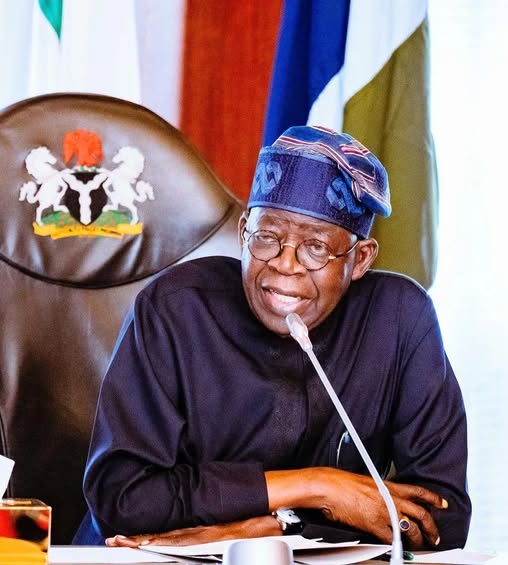
President Bola Tinubu on Friday reaffirmed his administration’s commitment to strengthening democracy, tackling insecurity, and revitalising the economy, as he honoured June 12 heroes and announced national honours for dozens of pro-democracy activists during Nigeria’s 2026 Democracy Day celebration.
Tinubu, in a nationwide broadcast marking 27 years of uninterrupted civilian rule, said democracy remained the foundation of national unity and progress, despite the country’s current security and economic challenges.
“Our democracy is not perfect, but it is ours, and we must continue to defend and strengthen it.” Tinubu said.
He urged electoral stakeholders to ensure peaceful and credible polls in the upcoming Ekiti and Osun elections, warning that public confidence in democracy depends on transparent processes, adding that democracy fails when citizens doubt the process.
Tinubu devoted a significant portion of his address to security, describing the recent abduction of schoolchildren in Oyo and Borno states as a painful reminder that democracy cannot thrive without safety.
He disclosed that the Federal Government had declared a security emergency, approved the recruitment of more than 50,000 police officers and thousands of military recruits, and allocated a record N5.41 trillion to defence and security in the 2026 budget.
The President said Nigeria had intensified military cooperation with international allies and moved toward more precise counter-terrorism operations.
In Arege, Borno State, we degraded ISWAP’s command centre. Terror-related deaths are down by 81% since 2015. Over 13,000 terrorists have been neutralised in the past year.
At the same time, he said the government would continue to offer repentant fighters a path back into society through Operation Safe Corridor.
To bandits, kidnappers, and sponsors of terror: Surrender or face the full force of the Nigerian State. These windows of surrender will not remain open forever.
On the economy, Tinubu defended the reforms introduced since 2023, saying they were necessary to stabilise public finances and restore investor confidence.
He noted that federation revenues had increased, fiscal transparency had improved, and investment was returning to sectors such as agriculture, manufacturing, energy, technology, and mining.
The President also highlighted reforms in the electricity sector, including the Electricity Act, efforts to reduce the metering deficit, and plans to raise N4 trillion to settle legacy debts.
Despite the reported gains, Tinubu acknowledged that many Nigerians were still struggling with inflation and the high cost of living. “Democracy must be felt in the quality of people’s lives… Democracy must be felt in the pocket”, he stated.
Reflecting on the significance of June 12, Tinubu described the 1993 election won by the late Chief M.K.O. Abiola as a defining moment in Nigeria’s history and paid tribute to pro-democracy figures who resisted military rule.
He announced national honours for dozens of activists, journalists, lawyers, and military officers who participated in the democracy struggle, including Ayoka Lawani, Richard Akinnola, Joe Okei-Odumakin, Major-General Ishola Williams (retd), and several others. A full honours list, he said, would be released in the coming days.
Tinubu also announced that the completed Institute of Petroleum Studies in Kaduna would be revitalised and renamed the General Shehu Musa Yar’Adua University of Geological Sciences and Engineering Technology in honour of the late military officer and democracy advocate.
Calling for national unity, the President urged Nigerians to reject ethnic and political divisions and work together to secure peace and prosperity. “Crime has no ethnicity. We must stand united and be assured that the enemies of our nation shall soon be history.” He added.
“The road ahead is steep. But June 12 reminds us: Nigerians do not break. We bend, we bleed, but we do not break.” The President concluded.
