


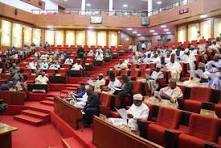
Nigeria may be a step closer to establishing state police forces as the Senate has scheduled consideration of a constitutional amendment bill that would pave the way for decentralised policing across the federation.
Senate Leader, Senator Opeyemi Bamidele, disclosed on Monday that the National Assembly had concluded arrangements to treat the state police proposal as a priority matter, with plans to pass the amendment separately from other ongoing constitutional review issues.
According to him, the decision reflects growing national consensus on the need to reform Nigeria’s policing structure in response to escalating security challenges across the country.
“Our position is very clear on state police. We are standing with Nigerians on the issue of state police. All strata of the federation have made it clear that there cannot be a better time to establish a state police than now,” Bamidele said.
He explained that lawmakers decided to isolate the state police provision from the broader constitutional amendment exercise because of the urgency attached to the issue.
The Senate Leader expressed confidence that the amendment process would record significant progress during the current legislative week.
“We came to the conclusion that we are going to pass the constitutional amendment in this respect to make a provision for the state police. If I can tell you as of today, that will come to fruition this very week because there is no need to allow any further delay,” he stated.
Bamidele revealed that consultations had intensified among key stakeholders, including the Presidency, security agencies and legal authorities, to ensure broad support for the proposal.
“They had been in a series of meetings with the office of Attorney-General, Chief of Staff to the President, Rt. Hon. Femi Gbajabiamila; Inspector-General of Police, Mr. Tunji Disu and other stakeholders in the last one week and that is why I can sit here to tell you that we’re pursuing that this week,” he said.
According to him, President Bola Tinubu, state governors and other critical stakeholders have expressed support for the creation of state police as part of efforts to strengthen internal security and improve law enforcement effectiveness.
Once approved by the National Assembly, the bill will be transmitted to the 36 State Houses of Assembly for ratification in line with constitutional requirements.
“The bill can as well be on its way to the 36 States Houses of Assembly as soon as possible because you know we will need two-thirds of the state assemblies to approve it before the president can assent to it. The president is also with us on this proposal. I am sure he cannot wait for the bill to come to him for assent,” Bamidele added.
His comments followed earlier remarks by the Chief of Staff to the President, Femi Gbajabiamila, who disclosed that President Tinubu would soon receive a comprehensive report on consultations surrounding the proposed establishment of state police.
The move marks one of the most significant security reform initiatives currently before the National Assembly and could fundamentally alter Nigeria’s policing architecture if eventually enacted.
For decades, policing in Nigeria has remained exclusively under the control of the Federal Government, with the Nigeria Police Force serving as the country’s sole constitutionally recognised law enforcement agency.
However, growing insecurity, including incidents of banditry, kidnapping, terrorism, communal clashes and farmer-herder conflicts, has intensified calls for a decentralised policing system that would allow states to establish and manage their own police formations.
Supporters of the proposal argue that state-controlled police forces would possess a better understanding of local languages, cultures, terrain and community dynamics, thereby enhancing intelligence gathering and response capabilities.
The proposal has, however, generated concerns among some stakeholders who fear that state police could be misused by political officeholders to intimidate opponents or interfere with democratic processes.
Proponents counter that robust legal safeguards, operational guidelines and accountability mechanisms can be built into the constitutional framework to prevent abuse while strengthening public safety.
If passed and ratified by at least two-thirds of the 36 State Houses of Assembly, the amendment would remove one of the major constitutional barriers to the creation of state police and mark a historic shift in Nigeria’s approach to internal security management.
The debate over state police has remained one of the most contentious constitutional issues since Nigeria’s return to democratic rule in 1999. Section 214(1) of the Constitution currently establishes a single Nigeria Police Force for the entire federation, effectively prohibiting state and local police formations.
Advocates of state police have long argued that Nigeria’s diverse security challenges require localised responses that a centralised policing structure struggles to provide. The issue gained renewed momentum following rising cases of kidnapping, banditry, insurgency and violent crimes across several regions.
Successive constitutional review efforts considered the proposal without achieving a breakthrough. However, support for decentralised policing has grown significantly in recent years, with governors, traditional rulers, security experts and civil society organisations increasingly backing the reform. President Bola Tinubu has also publicly endorsed the initiative as part of broader efforts to strengthen Nigeria’s security architecture and improve law enforcement efficiency nationwide.
