


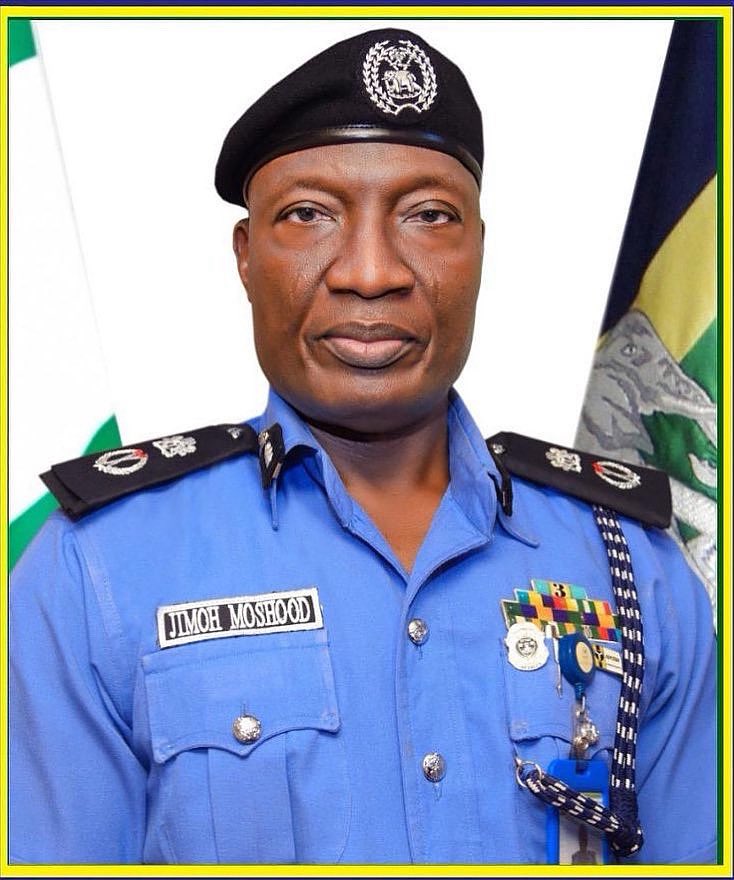
The Commissioner of Police in Lagos State, Olohundare Jimoh, has reported a significant decline in major crimes across the state during his first year in office, attributing the improvement to intelligence-driven policing, stronger community partnerships, and expanded tactical operations.
Jimoh disclosed this while briefing journalists at the Lagos State Police Command headquarters in Ikeja on Tuesday, outlining achievements recorded between February 18, 2025, and February 17, 2026.
“Internal security remained stable throughout the period, with no serious breach of public peace,” the commissioner said.
“Civil protests were professionally managed without escalation.”
He said the command ensured balanced security during public demonstrations and celebrations, stressing that both protesters and celebrants were protected.
“Those celebrating were provided security, and those protesting were equally protected,” Jimoh said.
“We ensured that no protest degenerated into violence, and incidents threatening critical infrastructure, such as the Third Mainland Bridge, were contained with minimum force.”
The police chief said the state recorded a notable reduction in cult-related violence, particularly in notorious hotspots such as Oshodi, Ketu, Mushin, and Lagos Island.
“Several suspects linked to violent crimes were arrested, including a long-time gang leader who had been on the police watchlist for nearly two decades,” he disclosed.
Jimoh said more than 150 stolen vehicles were recovered during the period under review, adding that specialised anti-car theft units were established across area commands to curb vehicle-related crimes.
“Over 150 stolen vehicles were recovered, and dedicated anti-car theft units were created across the commands to address the menace,” he said.
To strengthen operational capacity, the commissioner said tactical squads were expanded from 23 to 35 units, covering all local government areas, while enhanced intelligence and surveillance operations helped prevent opportunistic crimes.
“Our tactical squads were expanded from 23 to 35 units to ensure full coverage across the state. Intelligence and surveillance operations were also intensified to prevent crimes before they occur,” he said.
He also announced the creation of the Eko Strike Force to complement the Rapid Response Squad (RRS), with patrol vehicles and other logistics provided through the Lagos State Security Trust Fund.
“The Eko Strike Force was established to complement the RRS, with vehicles and equipment provided by the Lagos State Security Trust Fund to strengthen our rapid response capability,” Jimoh said.
The commissioner said technology-driven policing and community engagement were central to improving response times and strengthening public trust.
“Technology and community engagement have been critical in improving response times and building public confidence in the police,” he noted.
According to him, the command also provided security for several high-profile national and international events attended by governors, ministers, and foreign dignitaries.
“The command remains committed to protecting residents and visitors. We will continue to ensure that Lagos remains not only Nigeria’s economic hub but also a model of security and public safety,” he said.
Jimoh described Lagos as one of the safest states in Nigeria, despite its population density and status as the country’s commercial centre.
“This underscores Lagos’ status as one of the safest states in the country, in spite of its dense population and strategic economic role,” he said.
He commended the Inspector-General of Police, Kayode Egbetokun, for his support and thanked Governor Babajide Sanwo-Olu for strengthening the command’s operational capacity.
“I thank the Inspector-General of Police for his immense support and the Governor of Lagos State for donating four new patrol vehicles through the Security Trust Fund,” he said.
Jimoh also described the state’s security control centres as “state-of-the-art,” noting that the Federal Government had supported their operations.
“These control centres are state-of-the-art and essential for monitoring security across our over 24 million population,” he said.
“The Federal Government, through the Minister of Works, Dave Umahi, has also provided support, including monthly allowances for personnel across Marine Police units, Federal Highway Patrol, and the control centres to sustain operations.”
