


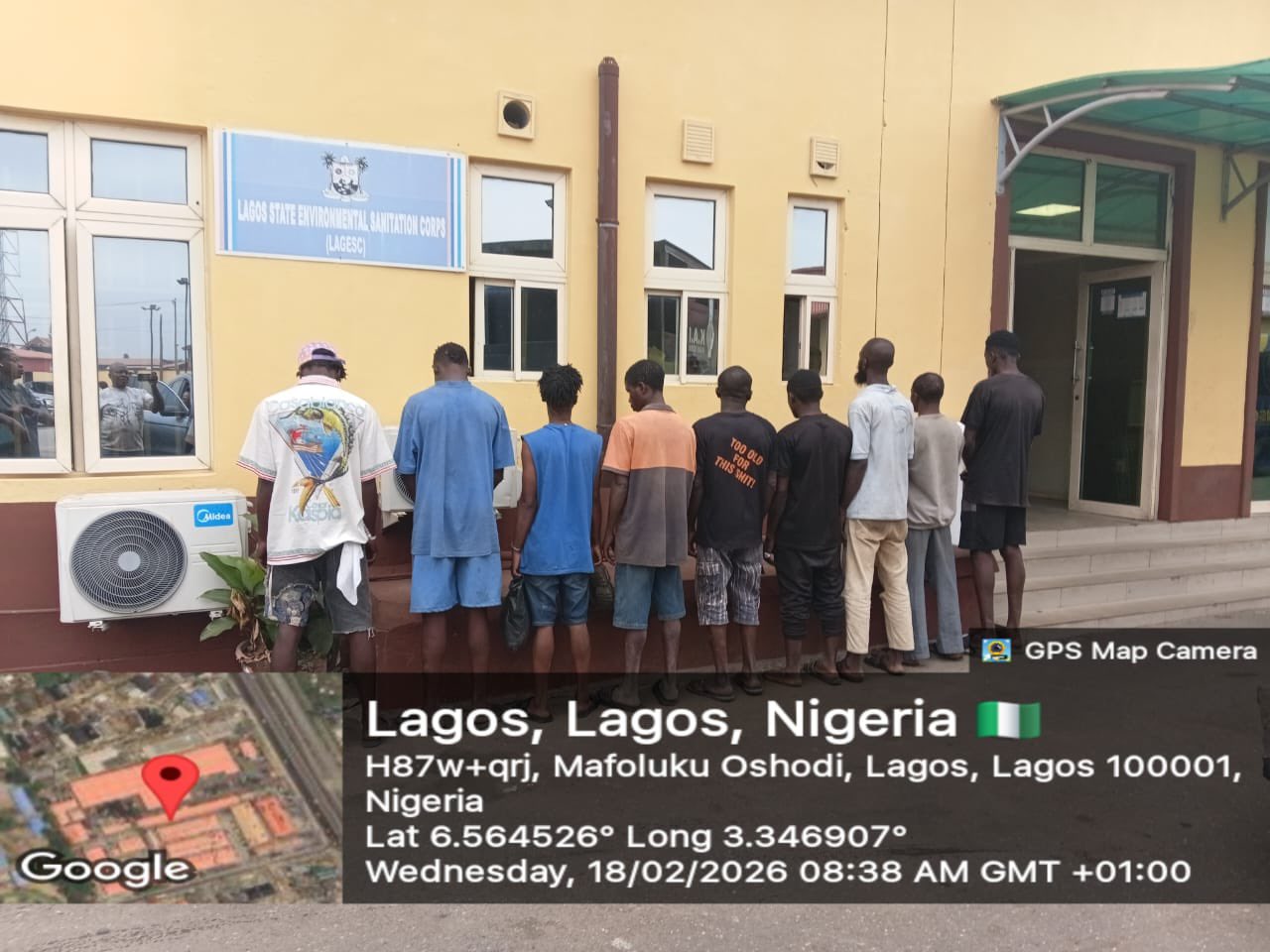
The Lagos State Government has intensified its sanitation enforcement drive, arresting 10 individuals for open defecation in parts of Lagos Island, as authorities warn that the practice poses a serious threat to public health.
The arrests were carried out in Ebute Ero, Apongbon, and Inner Marina as part of the state’s Water, Sanitation and Hygiene (WASH) agenda, according to a statement issued on Wednesday by the Managing Director of the Lagos Waste Management Authority (LAWMA), Dr Muyiwa Gbadegesin.
“Ten persons were apprehended for open defecation at Ebute Ero, Apongbon, and Inner Marina. They have been transferred for prosecution at the Special Offences (Mobile) Court, Bolade, Oshodi,” Gbadegesin said.
He described open defecation as a major environmental and public health hazard, particularly in densely populated and high-footfall areas.
“This action supports Lagos’ WASH agenda. Open defecation is a direct threat to public health—contaminating the environment and increasing disease risk in high-footfall areas,” he said.
Gbadegesin further disclosed that the state government has continued to expand access to sanitation facilities to discourage the practice.
“Across the state, we currently have about 1,710 public toilets, while licensed investors operate over 900 private public toilets to expand access across communities,” he added.
Meanwhile, the Lagos State Government has also stepped up its flood control and environmental management efforts with the demolition of illegal structures erected on drainage channels in the Ikosi Road area of Kosofe Local Government Area.
The demolition exercise was disclosed in a statement on Monday by the Commissioner for the Ministry of Environment and Water Resources, Tokunbo Wahab, who said the move was part of ongoing efforts to prevent flooding and protect residents.
“The exercise is aimed at controlling flooding and protecting lives and properties of residents across the state,” Wahab stated.
He reiterated the government’s warning that illegal structures obstructing drainage channels would not be tolerated, urging residents and developers to comply with environmental regulations.
