


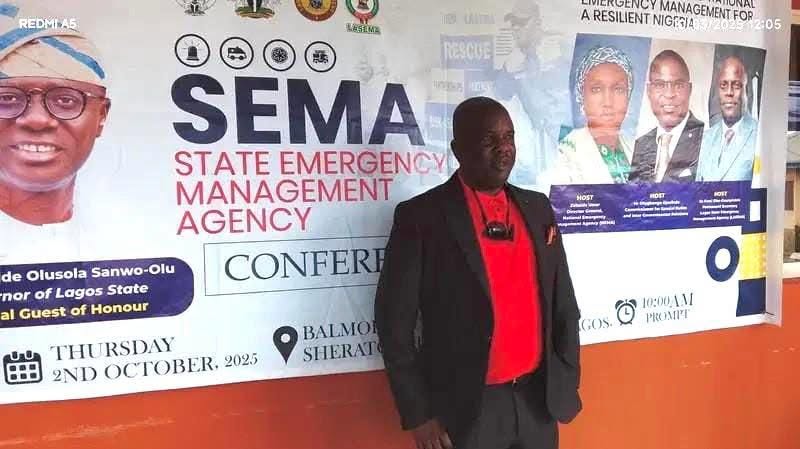
The Lagos State Government has warned residents to desist from making prank or nuisance calls to emergency lines, describing such actions as dangerous distractions that waste valuable resources and delay life-saving responses.
The General Manager, Lagos State Command and Control Centre (LSCCC), Mr. Femi Giwa, issued the warning while addressing journalists at the three-day National State Emergency Management Agencies (SEMA) Conference held in Lagos.
The event, themed “Strengthening Sub-National Emergency Management for a Resilient Nigeria,” brought together emergency management experts and stakeholders from across the country.
Giwa explained that prank calls and false alerts severely affect emergency response operations in the state.“Response time is very important in saving lives. When residents make false calls, they block genuine callers from reaching emergency lines.
“This delays first responders and affects the golden hour — that crucial window between life and death,” he said.
The LSCCC boss emphasized that while disasters are often unpredictable, adequate preparedness and inter-agency collaboration can significantly reduce their impact.
He called on state governments to strengthen their institutions, adopt technology, and foster greater collaboration to improve emergency management systems nationwide.
“Disasters occur when hazard, risk, and vulnerability converge — and this is common across states. The SEMA Conference provides an opportunity for agencies to share knowledge, prevent crises, and enhance response and recovery efforts toward building a more resilient Nigeria,” Giwa noted.
Highlighting the importance of collective effort, Giwa said effective disaster management depends on strong institutions, adequate infrastructure, and joint action among agencies.
“When a building collapses, for instance, it takes firefighters, LASBCA, medical responders, and other agencies working together. If institutions are not equipped and their capacities not built, response becomes difficult. It’s not rocket science — we must invest in institutions, capacity-building, and infrastructure,” he added.
He further encouraged states lagging behind to explore innovative funding options, strengthen community engagement, and establish partnerships with the private sector.
Giwa also urged emergency managers to leverage Information and Communication Technology (ICT) for predictive analytics, data gathering, and enhanced coordination.
