


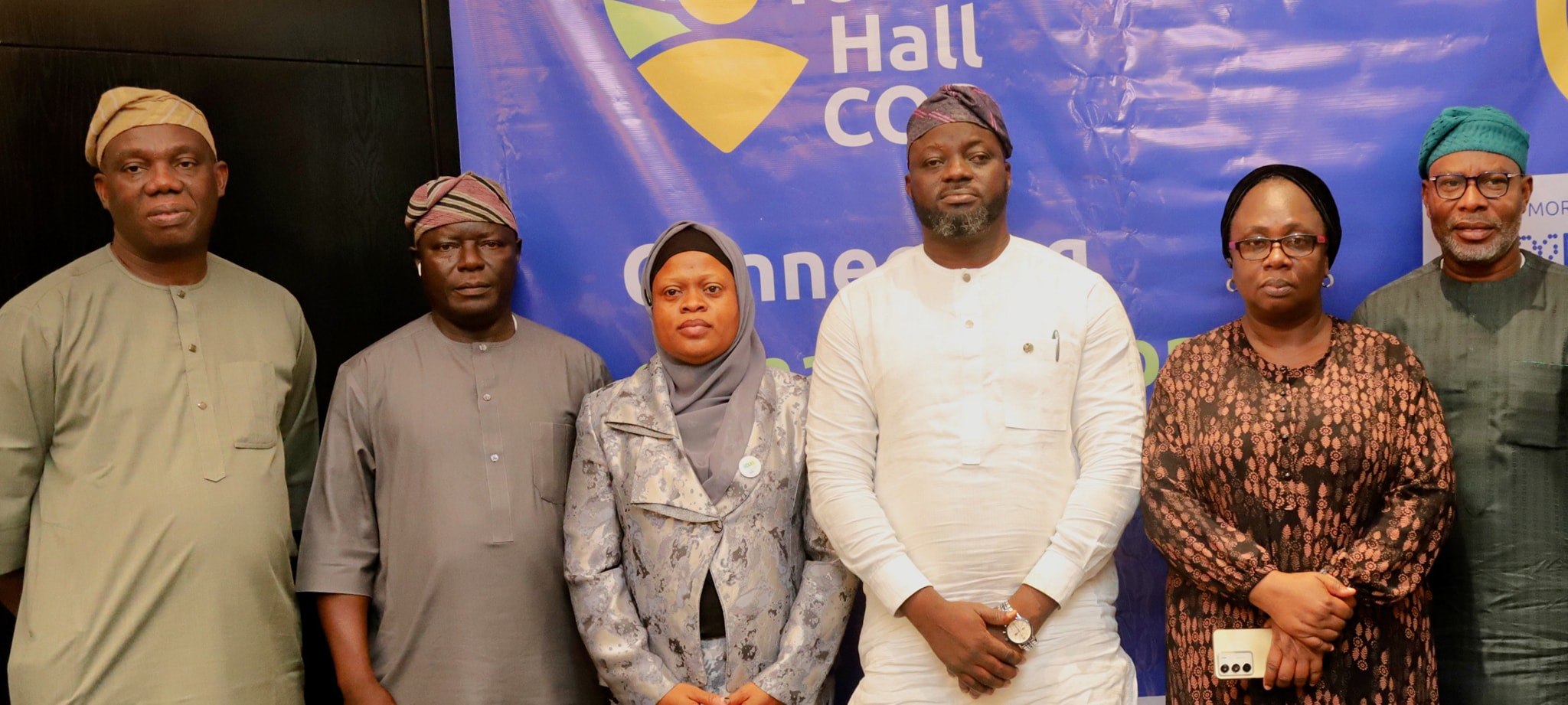
The Lagos State Government has reiterated its commitment to building a climate-resilient city through strong partnerships with the private sector, development agencies, and local communities, stressing that environmental sustainability is a shared responsibility.
Speaking at the maiden edition of the Town Hall International Climate Conference of the Parties (COP) held on Wednesday in Ikeja, the Special Adviser to the Governor on Environment, Engr. Olakunle Rotimi-Akodu, emphasized that the environmental choices made today would determine the legacy left for future generations.
“Climate change is not an abstract conversation. It is now a daily lived experience that affects livelihoods, health, and the economic well-being of every Lagos resident,” Akodu said.
He noted that Lagos is already grappling with severe climate challenges — including rising sea levels, recurrent flooding, extreme heat, biodiversity loss, and pressure on infrastructure — adding that these threats would intensify if urgent and coordinated action is not taken.
According to him, the State Government has taken bold and evidence-based steps to build resilience and pursue sustainability through the Lagos Climate Action Plan (2020–2025), which serves as the blueprint for reducing greenhouse gas emissions and achieving net-zero targets by 2050.
Akodu explained that the plan has evolved into the Lagos Climate Adaptation and Resilience Plan (LCARP) — an initiative designed to accelerate climate action by identifying investment-ready projects that promote green growth and strengthen the city’s resilience.
He added that the state is scaling up its waste-to-wealth programmes, converting waste into energy and creating new economic opportunities for residents.
“We are deliberately reducing dependence on fossil fuels by exploring cleaner alternatives that support sustainable livelihoods,” he said.
The Special Adviser stressed that while the government provides policy direction and leadership, true climate resilience requires collective participation.
“Citizens must adopt sustainable lifestyles, businesses must embrace green innovation, and communities must be empowered to protect their environments,” he stated.
He underscored that environmental reforms in key sectors such as waste management, plastic pollution, and flood prevention would only succeed with public compliance and shared commitment.
“The Town Hall COP is not merely a consultation; it is a co-creation platform that allows everyone to contribute ideas and priorities as Lagos prepares its input for the upcoming COP deliberations,” Akodu said.
“It reflects our collective resolve to co-create localized solutions to the global climate challenge.”
Earlier, Dr. Azizat Gbadegesin, Senior Specialist for Climate Change, Energy, and Resilient Work Stream at ICLEI Africa, said Lagos joined other African cities such as Nairobi, Kampala, and Walvis Bay to host the Town Hall COP, which provides a platform for communities to take ownership of the climate conversation.
She explained that the outcomes of the town hall would be presented to national governments and fed into the United Nations Framework Convention on Climate Change (UNFCCC) process through ICLEI’s role as the Focal Point of the Local Governments and Municipal Authorities (LGMA) constituency.
In a statement, Adekunle Adeshina, Director of Public Affairs, Lagos State Ministry of Environment and Water Resources, reaffirmed the government’s dedication to fostering inclusive dialogue and strategic collaboration.
“Environmental sustainability cannot be achieved by government alone,” Adeshina said. “It requires the participation of every resident, every business, and every institution in shaping a greener and more resilient Lagos.”
