


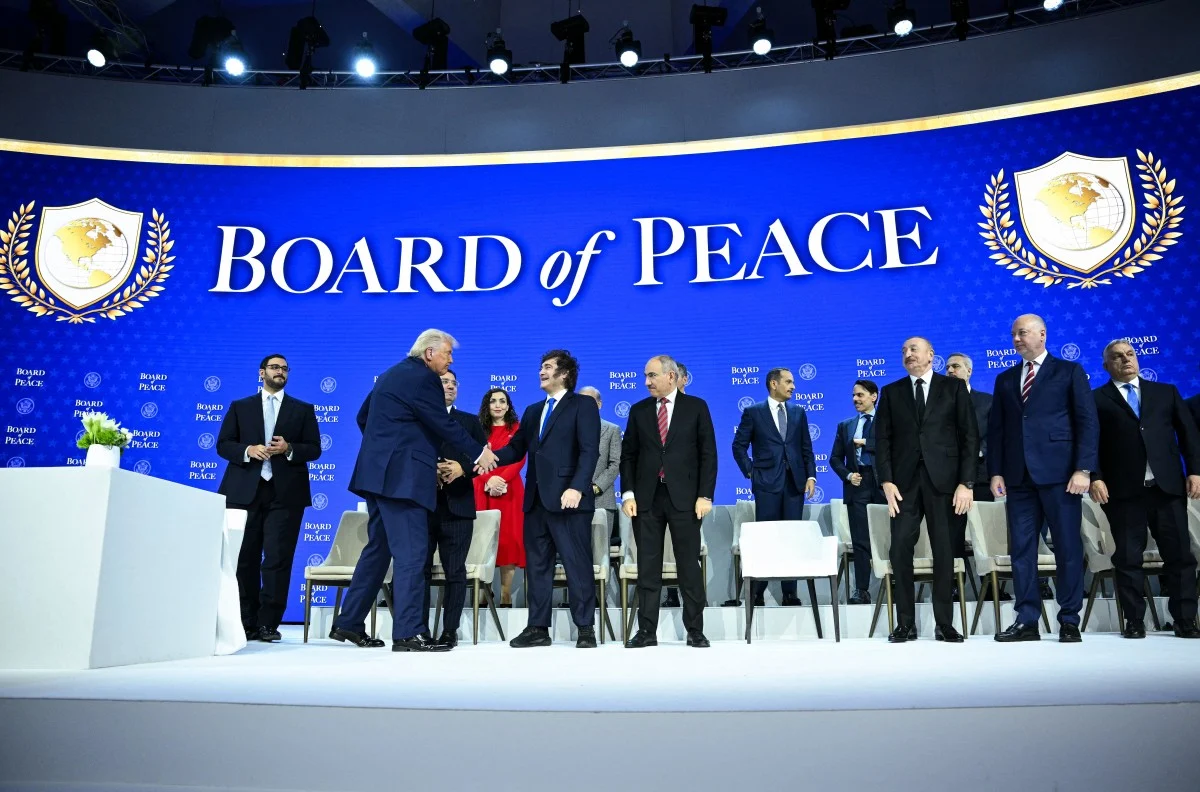
United States President Donald Trump on Thursday unveiled a controversial new global conflict-resolution initiative, the “Board of Peace,” at the World Economic Forum in Davos, drawing mixed reactions from world leaders and key US allies.
The initiative, which Trump will chair, is designed to mediate and resolve international conflicts through a select council of permanent members, each required to pay a reported $1 billion fee for a seat on the board.
The signing ceremony was attended by leaders and senior officials from 19 countries, including Argentina, Hungary and Saudi Arabia. Trump said the Board of Peace would operate “in conjunction” with the United Nations, despite concerns among diplomats that it could undermine or rival existing multilateral institutions.
US Secretary of State Marco Rubio said the board’s immediate priority would be stabilising the Middle East, particularly securing a lasting ceasefire agreement in Gaza.
“The board’s focus is first and foremost on making sure that this peace deal in Gaza becomes enduring,” Rubio said.
However, the composition and mandate of the board have sparked international debate, especially following Trump’s invitation to Russian President Vladimir Putin, whose country invaded Ukraine four years ago.
While Trump claimed that Putin had accepted the invitation, the Kremlin said the Russian leader was still considering participation.
Several long-standing US allies declined to attend the ceremony or endorse the initiative. France and Britain were notably absent, while UK Foreign Secretary Yvette Cooper said London had reservations over the legal and diplomatic implications of the proposal.
“We won’t be one of the signatories today, because this is about a legal treaty that raises much broader issues,” Cooper said, citing concerns over Russia’s involvement.
Norway, Sweden and Slovenia have also opted out of the initiative, while Italy and Germany are still reviewing the proposal, according to reports.
Following the Davos ceremony, Trump is expected to meet Ukrainian President Volodymyr Zelensky to discuss prospects for a ceasefire in Ukraine. Zelensky has previously voiced concerns that Trump’s foreign policy priorities, including renewed interest in Greenland, could divert international focus from Russia’s ongoing invasion of his country.
Meanwhile, Trump’s special envoy, Steve Witkoff, said negotiations aimed at ending the war in Ukraine had made progress, with only one major issue left unresolved.
“Talks have moved forward significantly,” Witkoff said, adding that he would travel to Moscow to meet President Putin before heading to Abu Dhabi for further discussions with regional stakeholders.
Diplomatic observers say the success or failure of the Board of Peace may depend on whether it can gain broader international legitimacy and clarify its relationship with existing global institutions, particularly the United Nations.
