


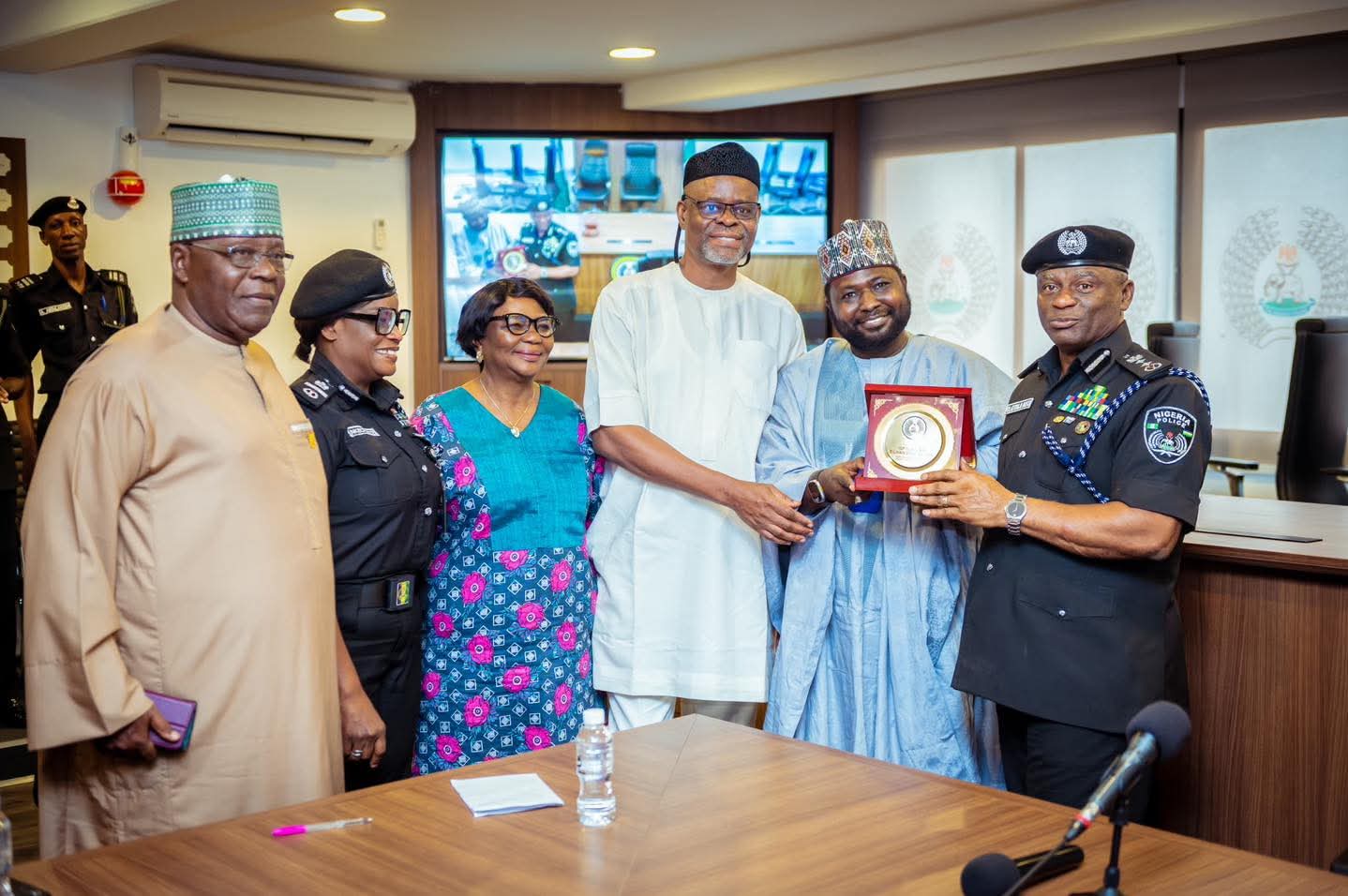
The Nigeria Police has moved to strengthen healthcare delivery for its personnel, with Inspector-General of Police Olatunji Disu pledging to prioritise the health and welfare needs of frontline officers.
This follows the visit of the Board of Directors of Police Health Maintenance Limited (PHML) to the Force Headquarters, Abuja, where the IGP was formally inaugurated as Chairman of the Board, marking a new phase of direct oversight of the police healthcare system.
Force Public Relations Officer, DCP Anthony Placid, said the development underscores the commitment of the current police leadership to reposition medical services within the Force.
“The inauguration of the Inspector-General of Police as Chairman of PHML marks a significant step towards strengthening institutional oversight and ensuring improved healthcare delivery for officers and their families,” Placid stated.
He noted that the PHML delegation, led by DIG Aminu Yesufu (Rtd), included key stakeholders such as AIG Adenike Abuwa (Rtd), Dr. Otive Iguzor, Dr. Yusuf Kalli Gazali, and the Force Medical Director, AIG Nkechi Eze.
Placid disclosed that the PHML leadership highlighted ongoing interventions aimed at improving service delivery across police medical facilities.
“The Board reaffirmed its commitment to service excellence, citing recent renovations of police hospitals in Akure, Sokoto, Bambam, Yola, and Lagos as part of efforts to upgrade infrastructure and enhance patient care,” he said.
According to him, the organisation has also secured strategic partnerships to ensure prompt and cost-free treatment for officers in critical situations.
“PHML has entered into agreements with Federal Tertiary Hospitals to guarantee immediate treatment of gunshot and trauma cases at no cost, reflecting a proactive approach to addressing the occupational risks faced by police personnel,” Placid added.
He further revealed that a specialised collaboration has been established to tackle chronic health conditions among officers.
“A partnership with Zenith Healthcare Limited has been secured to provide advanced renal care, ensuring that personnel have access to high-quality interventions for long-term medical needs,” he said.
Speaking during the engagement, the IGP emphasised that the health of officers remains central to effective policing and national security.
“The Inspector-General stressed that the wellbeing of officers is a critical pillar of national security and must be treated as such in all policy and operational considerations,” Placid said.
He added that the IGP charged the PHML leadership to focus on practical outcomes that directly impact personnel across all ranks.
“He urged the Board to move beyond corporate metrics and ensure that every aspect of medical planning translates into tangible benefits for officers, particularly those on the front lines,” he noted.
The police boss also drew attention to existing gaps within the system, especially concerning retired personnel and infrastructure deficits.
“The IGP highlighted the need to address the retirement gap affecting insurance coverage for retired officers and called for urgent rehabilitation of healthcare facilities within police barracks nationwide,” Placid stated.
Reiterating his commitment, the IGP assured that the Force would continue to invest in the physical and mental wellbeing of its personnel.
“He reaffirmed his resolve to build a resilient and healthy police workforce, noting that the effective protection of lives and property depends significantly on the wellbeing of officers,” Placid said.
The Nigeria Police said the renewed focus on healthcare is part of broader reforms aimed at boosting morale, efficiency, and service delivery across the Force.
