


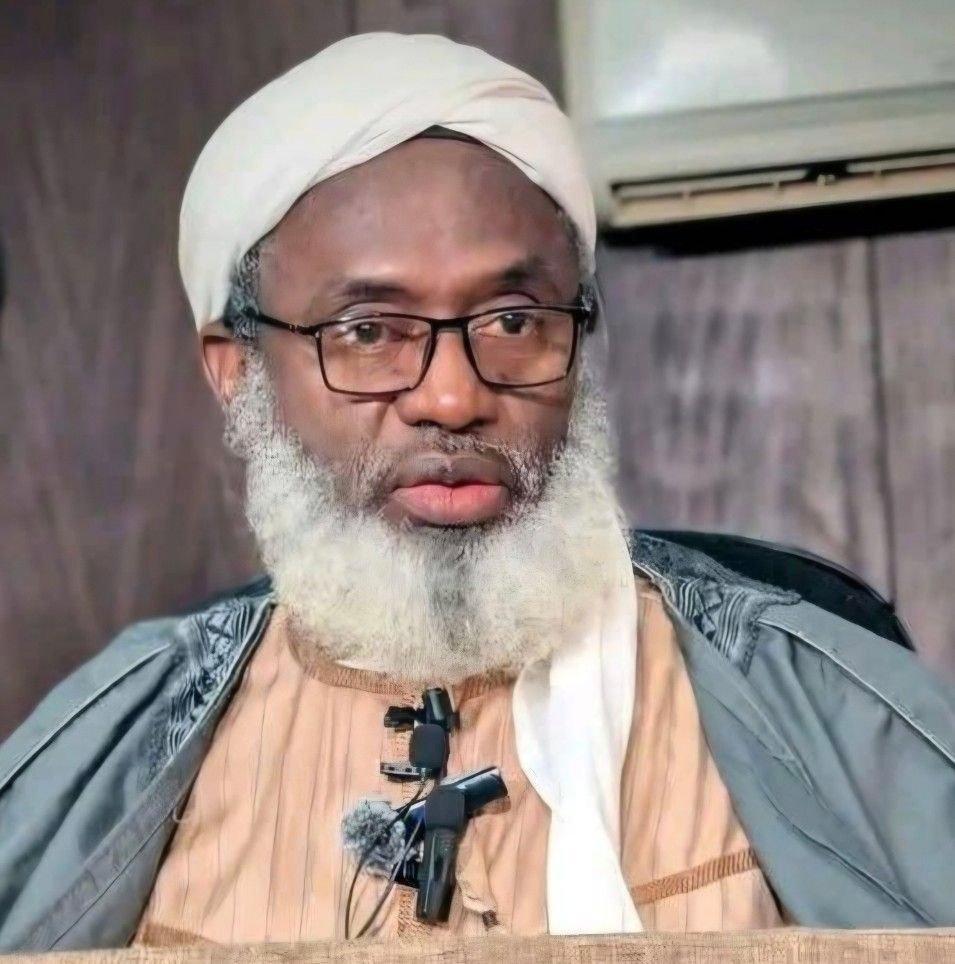
Islamic cleric, Ahmad Gumi, has reacted to reports surrounding the killing of a top ISIS commander in Nigeria, stressing that the fight against terrorism must be pursued without endangering innocent civilians.
Gumi made the remarks on Saturday in a Facebook post while commenting on claims that Nigerian troops, working alongside American forces, carried out a successful operation against Abu-Bilal al-Minuki, a senior ISIS figure reportedly operating within the Lake Chad Basin region.
While supporting efforts to eliminate terrorist groups, the cleric warned against military actions that could result in civilian casualties.
“It’s a religious obligation to annihilate terrorists, but not with Beelzebub and hands stained with the blood of innocent men, women, and children,” Gumi wrote.
The comments came amid international attention over the reported operation, which was said to have targeted Abu-Bilal al-Minuki, described in security reports as a key ISIS operative linked to extremist activities across parts of Africa.
Reacting to the development, Donald Trump claimed that American forces collaborated with the Nigerian Armed Forces in executing the mission.
According to Trump, the operation was carried out through what he described as a “meticulously planned and very complex mission.”
“Tonight, at my direction, brave American forces and the Armed Forces of Nigeria flawlessly executed a meticulously planned and very complex mission to eliminate the most active terrorist in the world from the battlefield,” he said.
The American president further stated that the ISIS commander had attempted to evade capture by hiding in Africa but was eventually tracked through intelligence operations.
“He will no longer terrorize the people of Africa, or help plan operations to target Americans. With his removal, ISIS’s global operation is greatly diminished,” Trump added, while thanking the Nigerian government for its cooperation.
The reported killing has since sparked widespread reactions online, with many describing it as a major victory in the ongoing fight against terrorism in the Lake Chad region and the wider Sahel.
Others, however, echoed concerns about the humanitarian consequences of military offensives in conflict zones, particularly the risk posed to non-combatants living in affected communities.
Nigeria has battled insurgency and extremist violence in the North-East for more than a decade, with security forces intensifying operations against ISIS-affiliated factions and other armed groups operating around the Lake Chad Basin.
