


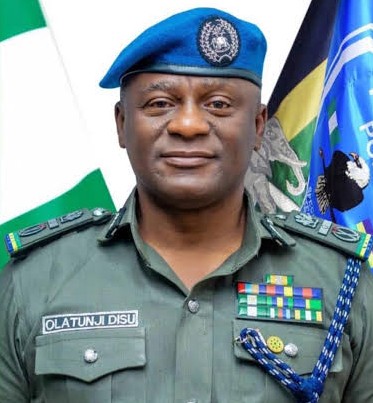
The Nigeria Police Force has dismissed reports claiming the Inspector-General of Police, IGP Olatunji Disu, ordered the blanket disbandment of all tactical units across state commands, describing the publication as a misrepresentation of ongoing reforms within the Force.
In a statement issued on Sunday, the Force Public Relations Officer, DCP Anthony Placid, clarified that the directive by the IGP was aimed at restructuring and reducing the number of tactical teams, not abolishing them.
“The attention of the Inspector-General of Police has been drawn to a misleading report suggesting the dissolution of all tactical units nationwide. This is not accurate and does not reflect the intent of the directive,” Placid said.
He explained that the IGP recognises the critical role tactical teams play in crime prevention and law enforcement but raised concerns over their proliferation and the challenges associated with inadequate supervision.
“The IGP, having served across various commands, understands the importance of tactical units in crime-fighting. However, he is concerned about the unchecked multiplication of these teams, which has not only strained manpower at Police Divisions and Posts but also led to operational excesses that affect the integrity of the Force,” he stated.
According to the statement, the new directive mandates a cap on the number of tactical teams at different command levels to ensure better coordination and accountability.
“To address these concerns, the Inspector-General has directed that tactical teams at Zonal and State Command levels be reduced to a maximum of five, while those at Area Command and Divisional levels should not exceed three,” Placid said.
He noted that the restructuring could involve merging or disbanding certain teams at the discretion of command heads.
“This process may entail the merging or disbandment of some teams, depending on operational needs, but it is not a blanket dissolution as wrongly reported,” he added.
The police spokesperson further clarified that the directive does not apply to state-established security outfits operating in collaboration with the Police.
“The teams referenced in the directive exclude state government-created outfits such as the Rapid Response Squad in Lagos, SRS in Oyo State, and Operation DOO-AKPOR in Bayelsa, among others,” he said.
Placid emphasised that the reform is part of broader efforts by the IGP to improve policing standards, enhance supervision, and rebuild public trust.
“This initiative is designed to free up personnel for deployment at Police Stations, strengthen community policing, and reduce public complaints arising from the conduct of poorly supervised tactical teams,” he said.
He added that the move aligns with the IGP’s commitment to accountability and a more people-oriented policing system.
“The Inspector-General remains committed to building a professional, accountable, and citizen-focused Police Force. This restructuring is a deliberate step towards achieving that objective,” Placid stated.
