


In a move to enforce uniformity and improve learning outcomes, the Lagos State Government has initiated plans for a binding, harmonised academic calendar for all primary and secondary schools in the state.
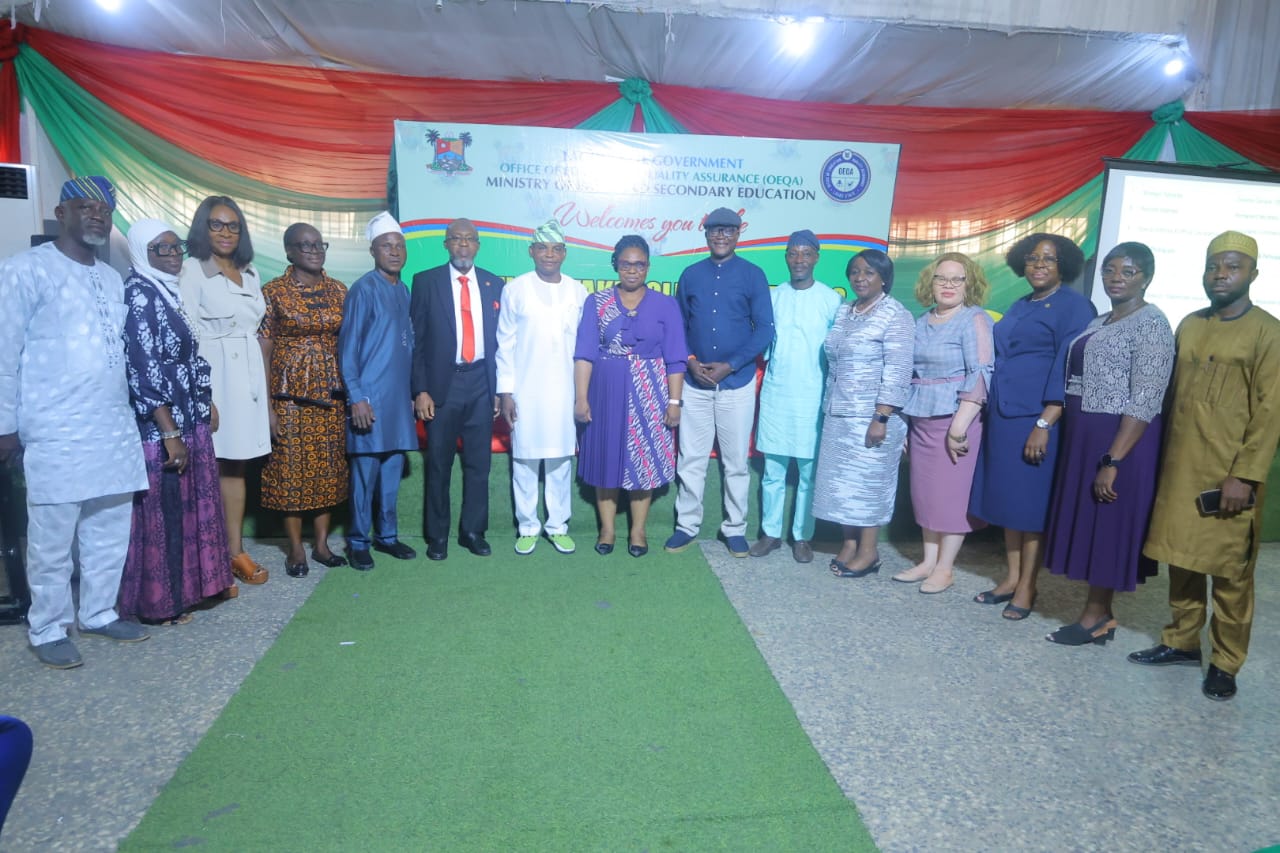
The initiative, being driven by the Office of Education Quality Assurance (OEQA), commenced with a preliminary stakeholders’ meeting held at the NUT Pavilion in Alausa, Ikeja, bringing together key players across the education sector.
Speaking at the session, the Commissioner for Basic and Secondary Education, Jamiu Alli-Balogun, underscored the importance of synergy, accountability and strict adherence to standards, noting that the proposed calendar would be binding on all schools – public and private alike.
According to him, the harmonised structure would clearly define instructional periods, holidays and examination timelines, ensuring consistency across the state’s education system.
“This initiative is a collective effort to bring about uniformity in our academic system and ultimately improve learning outcomes for our students. We must work together to ensure that the calendar is realistic, implementable and beneficial to all stakeholders,” he said.
Also speaking, the Permanent Secretary in the ministry, Mrs. Abisola Dokunmu-Adegbite, represented by the Director of Basic Education, Mrs. Oluwatoyin Oyedele, described the harmonised calendar as a critical tool for ensuring continuity, efficiency and long-term planning.
She urged stakeholders to provide practical, solution-driven inputs that would strengthen the final outcome.
“A unified academic calendar is essential for stability in the education system. It allows for better planning, coordination and delivery of quality education across board,” she noted.
The Director-General of OEQA, Dr. Sulaimon Ogunmuyiwa, emphasised the need for strict compliance once the calendar is finalised, warning that inconsistencies could undermine quality assurance efforts in the state.
“We will not only develop a standard calendar but also strengthen monitoring mechanisms to ensure full compliance. Consistency is key to achieving quality assurance in education,” he said.
Ogunmuyiwa further highlighted OEQA’s strategic framework, S.C.R.I.P.T.S, which focuses on staff capacity, collaboration, revenue generation, institutional governance, professionalism and technology as drivers of improved service delivery.
“Our vision is clear, we aim to become the leading education quality assurance agency in Africa and, ultimately, the best in the world. The foundation for that is consistency, collaboration and adherence to standards,” he added.
Earlier, the Director of Planning, Research and Statistics at OEQA, Mrs. Evelyn Pelemo, explained that the meeting marked the foundation stage of the calendar development process, designed to gather stakeholder input, identify emerging challenges and develop workable options for the 2026/2027 academic session.
“This process is inclusive by design. It ensures that the final calendar reflects the realities within the sector and enjoys wide acceptance among stakeholders,” she said.
In his presentation, the Head of Policy, Planning and Training Unit, Mr. David Ojelade, described the academic calendar as a vital instrument for order, coordination and effectiveness within the education system.
He outlined key policy guidelines, including minimum instructional days, structured term timelines, public holidays and scheduled breaks, as well as a final validation process to ensure compliance and sustainability.
Stakeholders at the meeting, including the Nigeria Union of Teachers, Lagos State Universal Basic Education Board, West African Examinations Council and other education bodies, commended the initiative, noting that a harmonised calendar would provide a seamless academic experience for learners, teachers and parents.
They expressed optimism that the move would enhance coordination, reduce disruptions and promote stability across schools in Lagos State.
