


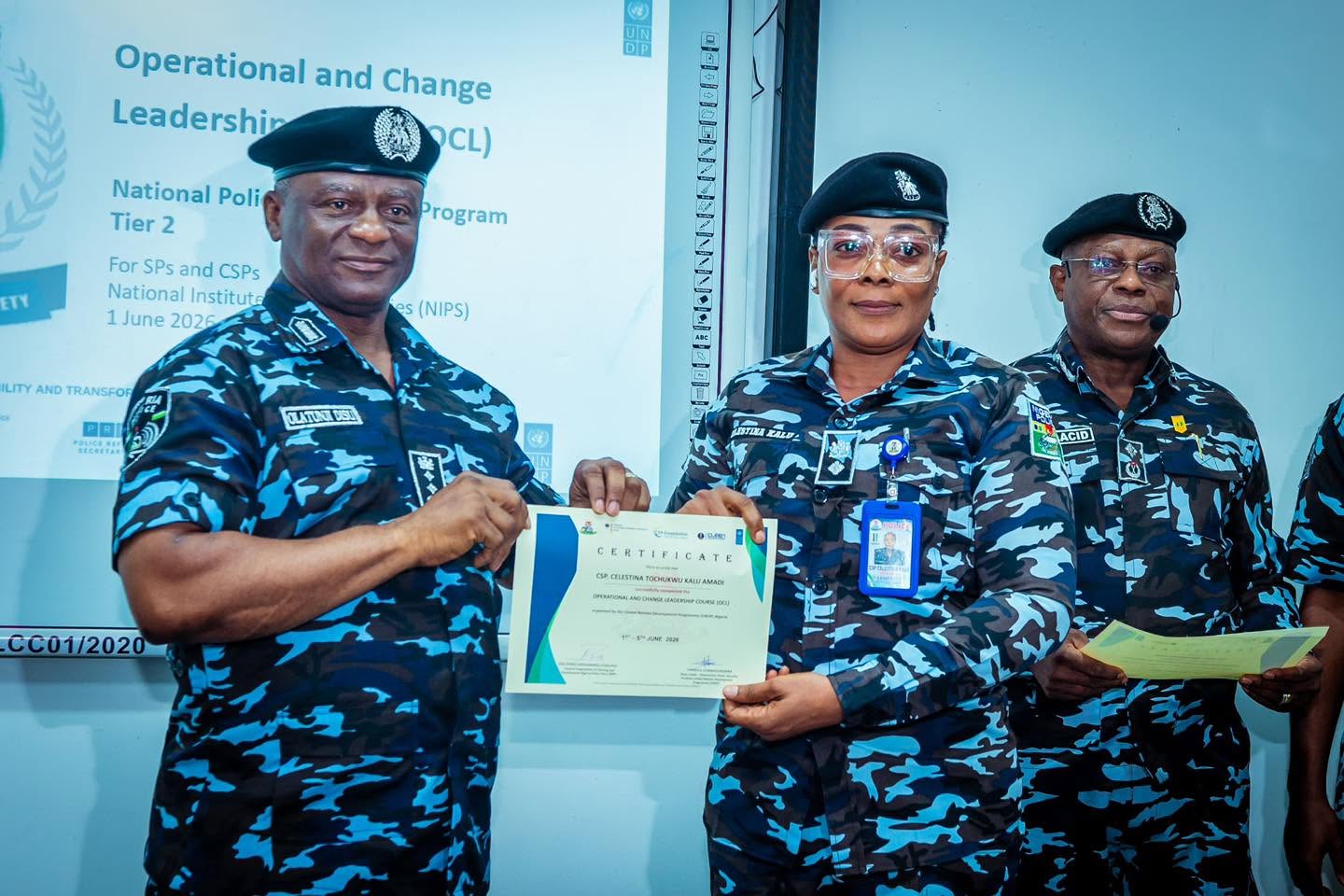
The Inspector-General of Police, IGP Olatunji Disu has called on senior officers to uphold professionalism, respect for human rights and effective service delivery as essential pillars of modern policing in Nigeria’s evolving security landscape.
Disu gave the charge at the closing ceremony of Operational Change and Leadership (OCL) Course for Superintendents and Chief Superintendents of Police at the Nigeria Police Institute, Jabi, Abuja.
According to a statement by the Force Public Relations Officer, DCP Anthony Placid, the five-day programme was designed to strengthen leadership capacity and equip officers with the skills required to navigate contemporary security challenges and drive ongoing reforms within the Nigeria Police Force.
Addressing participants at the closing ceremony held on Friday, Disu stressed that effective policing in today’s complex security environment demands leaders who are adaptable, accountable and capable of responding to emerging threats and changing public expectations.
“Effective policing in today’s dynamic security environment requires leaders who are innovative, technologically driven and committed to the highest standards of professionalism and accountability,” the IGP said.
He urged the officers to apply the knowledge and skills acquired during the course in their respective Commands and Formations, noting that leadership must translate into tangible improvements in operational effectiveness and public confidence.
“The lessons gained from this programme must not remain within the walls of the classroom. You must deploy them in strengthening leadership practices, enhancing operational efficiency, promoting professionalism and improving service delivery to the public,” he stated.
The police chief further emphasized the importance of safeguarding human rights and adhering to the rule of law while carrying out policing duties.
“Respect for human rights and adherence to lawful procedures are not optional. They are fundamental requirements for building public trust and sustaining the legitimacy of the Nigeria Police Force,” he said.
The IGP also encouraged participants to become champions of positive change by embracing intelligence-led policing, evidence-based decision-making and technology-enabled crime prevention strategies.
“You are expected to serve as ambassadors of reform and innovation. Promote intelligence-led policing, embrace evidence-based decision-making and leverage technology to prevent and combat crime more effectively,” he added.
Disu noted that the changing nature of crime and security threats requires continuous learning and adaptation, urging officers to remain proactive in developing solutions to emerging challenges.
“Our communities deserve a Police Force that is responsive, professional and prepared for the future. As leaders, you must remain committed to continuous improvement and the pursuit of excellence in service,” he said.
According to Placid, the course forms part of the Force leadership’s broader strategy to strengthen institutional capacity, enhance operational effectiveness and deepen ongoing reforms aimed at improving public trust and confidence in policing across the country.
He said the programme provided participants with practical insights into leadership, organizational change, strategic thinking and modern policing approaches necessary for addressing contemporary security concerns.
The statement added that the IGP expressed confidence that the participants would utilize the knowledge acquired to contribute meaningfully to the transformation of the Nigeria Police Force and the delivery of more effective policing services to Nigerians.
