


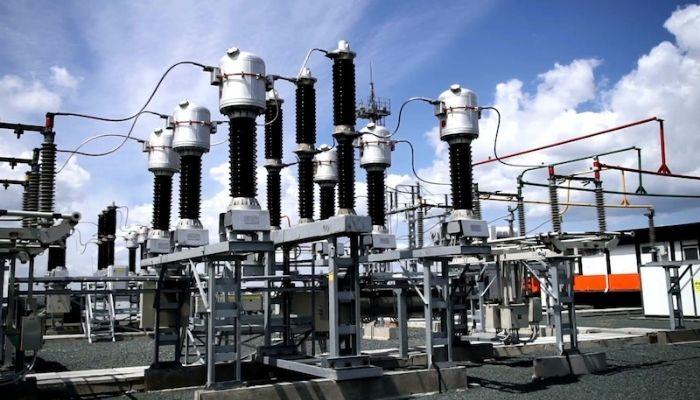
President Bola Ahmed Tinubu on Friday inaugurated an 11-member committee to oversee the establishment of the Grid Asset Management Company Limited (GAMCO), a new initiative designed to tackle long-standing challenges in Nigeria’s electricity transmission and grid management.
The inauguration followed the Federal Executive Council’s approval of the company’s creation at its meeting earlier in the week.
Chief of Staff to the President, Femi Gbajabiamila, who represented the President at the inauguration, said the committee’s assignment was central to the administration’s plan to revitalise Nigeria’s power sector.
“The proposed establishment of GAMCO is one of the revolutionary steps taken by Mr President and this administration in the all-important power sector,” he said.
“We are here for the inauguration of the Committee on Grid Asset Management Company (GAMCO), which is basically to optimise and revolutionise power generation, and in particular, the grid and transmission sector.”
A statement issued on Friday by Bayo Onanuga, Special Adviser to the President (Information and Strategy), said the initiative forms part of President Tinubu’s broader strategy to address stranded electricity generation, strengthen transmission infrastructure and improve power delivery nationwide.
Onanuga explained that the President conceived GAMCO as a quick-response mechanism to resolve chronic bottlenecks in Nigeria’s electricity value chain.
“In proposing GAMCO, President Tinubu hopes to fast-track a quick-fix solution to the endemic problems of stranded power, grid management and transmission in the country’s electricity sector,” he said.
He noted that the committee had been mandated to undertake a comprehensive review of the existing legal, regulatory and institutional frameworks governing the power sector.
“The committee will conduct a comprehensive review of existing laws, regulations, policies and institutional frameworks governing the electricity value chain, including generation, transmission, distribution and market operations,” Onanuga stated.
According to him, the panel will also examine the implications of the Electricity Reform Laws (2025) and the ongoing unbundling arrangements in the sector, particularly as they relate to asset ownership, management and regulatory oversight.
“It will identify areas of conflict, overlap or inconsistency between the proposed GAMCO framework and extant legal and regulatory instruments,” he added.
The committee is also expected to review the legal status and operational structure of assets belonging to the Niger Delta Power Holding Company (NDPHC) and the National Integrated Power Project (NIPP), including the Omotosho, Olorunsogo and Ihovbor power plants.
Onanuga said the three plants would serve as the pilot phase for the GAMCO initiative.
“It will assess the legal status, ownership structure and contractual obligations of the Niger Delta Power Holding Company and National Integrated Power Project assets, including the Omotosho, Olorunsogo and Ihovbor plants, which GAMCO plans to use for its pilot phase,” he said.
The committee will further examine the interface between GAMCO and the Nigeria Electricity Regulatory Commission, as well as determine the fiscal and market implications of the proposal.
“It will determine the fiscal, financial and market implications of the proposal, including subsidy exposure, market liquidity and revenue frameworks,” Onanuga explained.
He added that the panel would also determine whether the establishment and operationalisation of GAMCO require amendments to existing laws or executive directives.
Under the proposed structure, the Federal Government will fully own the company as a commercial venture, with its shares held by the Ministry of Finance Incorporated.
Onanuga said the company’s pilot phase would focus on the Benin–Lagos transmission corridor, one of the most critical power evacuation routes in the country.
“The Grid Asset Management Company Limited aims to recover and optimise stranded power generation using the Benin-Lagos transmission corridor as a pilot phase,” he said.
According to him, the corridor supplies bulk electricity to Ogun and Lagos states, which remain Nigeria’s largest industrial and commercial hubs.
“The company will modernise transmission evacuation, starting from the most critical axis within Nigeria’s power system,” Onanuga added.
The pilot programme will target improved power generation from three National Integrated Power Project plants: Omotosho with an installed capacity of 513 megawatts, Olorunsogo with 754 megawatts, and Ihovbor with 508 megawatts.
“GAMCO projects to recover at least 1,600 megawatts within 18 to 24 months, alongside the development of a new high-capacity 330KV+ double-circuit transmission line along the same corridor,” he said.
Onanuga explained that the initiative would rely on private capital mobilisation and disciplined asset management to improve electricity reliability.
He added that the long-term objective was to convert underperforming public assets into dependable electricity supply capable of boosting industrial productivity and economic competitiveness.
“The ultimate aim of the initiative is to enhance industrial productivity, safeguard jobs, improve investor confidence and boost welfare outcomes for Nigerian households, aligning with the Renewed Hope Agenda of the Tinubu administration,” he said.
The committee is chaired by the Chief of Staff to the President and includes the Attorney-General of the Federation and Minister of Justice, as well as the Ministers of Power, Works and Finance.
Other members include the Ministers of Communications and Digital Economy; Science, Technology and Innovation; Aviation and Aerospace Development; the Minister of State for Petroleum; the Chairman of the Nigeria Revenue Service; and energy expert Professor Yemi Oke.
The Permanent Secretary, Cabinet Affairs Office, Dr John Chidiebere Ezeamama, will serve as secretary of the committee.
