


The Lagos State Government has reaffirmed its commitment to preserving the memory of the transatlantic slave trade while harnessing Badagry’s rich cultural heritage to promote tourism, intercultural dialogue, and economic development.
PpThis commitment was restated during the commemoration of the International Day for the Remembrance of the Slave Trade and Its Abolition, held at the Badagry Heritage Museum on Saturday.
The annual event, observed globally on August 23, marks the Haitian Revolution of 1791, a watershed moment in the global struggle against slavery.
Representing the Lagos State Government, Chairman of the House Committee on Tourism, Arts and Culture, Hon. Solomon Bonu, said the state would continue to support the revival of Badagry’s tourism assets.
He urged stakeholders to collaborate in transforming the historic division into a globally recognised hub of remembrance and cultural exchange.
In his remarks, the Chairman of Badagry Local Government, Hon. Babatunde Hunpe, described Badagry as “Nigeria’s Jerusalem”, recalling its pivotal role as a major slave route in West Africa.
He expressed appreciation to President Bola Ahmed Tinubu, Governor Babajide Sanwo-Olu, and UNESCO for their continued support in preserving the town’s heritage.
“Badagry is blessed with natural and cultural endowments the world must see. It is our collective responsibility to preserve them for future generations while turning painful memories of the past into platforms of healing, learning, and pride,” he said.
Delivering the commemorative lecture, Professor Adejumo Tunji of the University of Lagos stressed the importance of community participation in heritage tourism.
He noted that countries around the world have successfully adopted Community-Based Tourism (CBT), urging Nigeria to implement similar initiatives to attract global visitors and boost the local economy.
He further emphasised that proper documentation of Badagry’s historic sites was key to repositioning the division as a world-class cultural tourism destination.
A goodwill message from UNESCO Director-General, Audrey Azoulay, was delivered at the event, underscoring the importance of remembering the victims of slavery, honouring their resilience, and inspiring societies to build a future founded on dignity, equality, and justice.
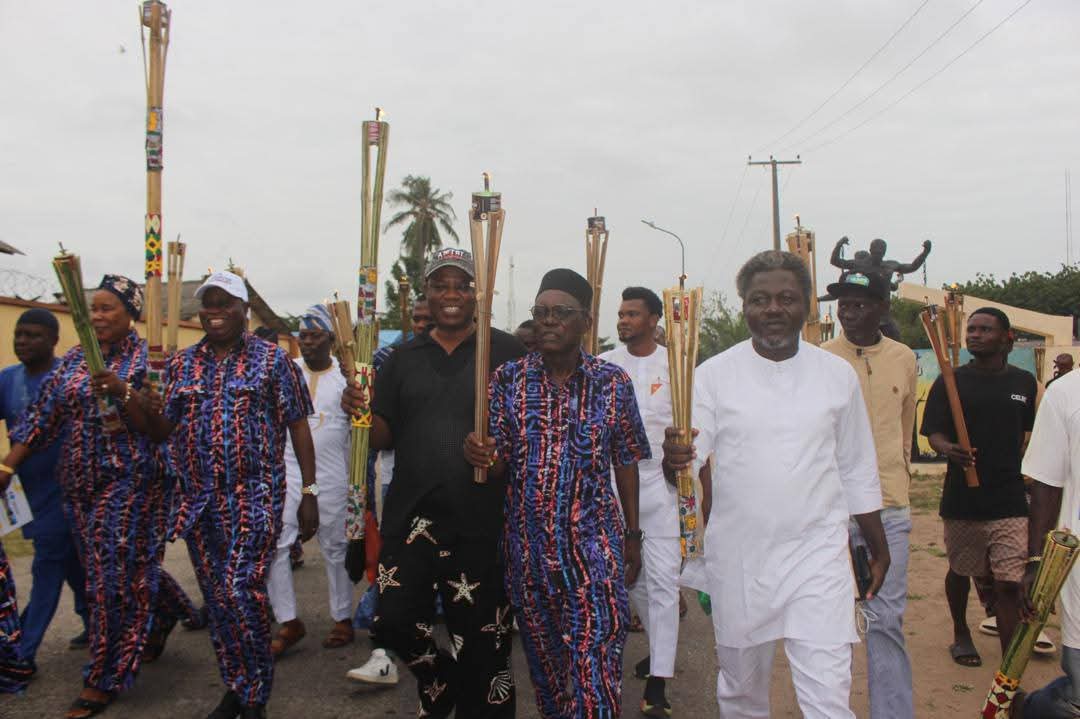
The commemoration featured a symbolic torchlight session (fitila), cultural performances, and reflections by traditional institutions on the role of indigenous belief systems in preserving African identity.
The event drew the participation of traditional rulers, cultural troupes, community leaders, and members of the Confederation of Badagry Tourism Practitioners, who collectively pledged to work with government and UNESCO to reposition Badagry as a global hub for remembrance, heritage, and cultural pride.
