


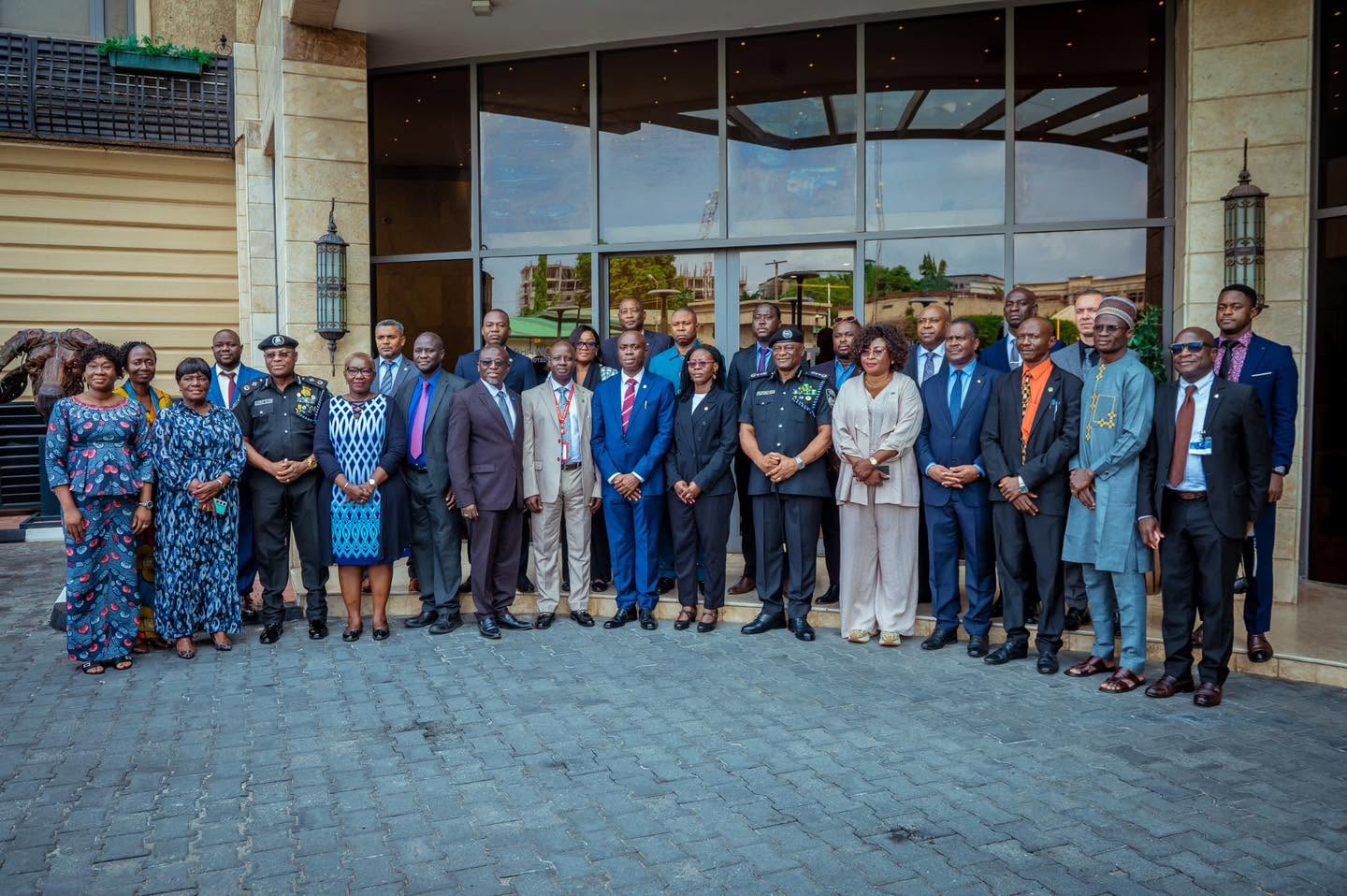
The Inspector-General of Police, IGP Olatunji Disu, has called for stronger regional cooperation among West African law enforcement agencies, warning that transnational criminal networks are exploiting national borders to expand human trafficking, terrorism financing, cybercrime and arms smuggling operations across the sub-region.
The police chief made the call on Monday while presiding over the 11th Meeting of Heads of INTERPOL National Central Bureaus (NCBs) for West Africa held at Johnwood Hotel, Abuja.
The gathering brought together heads of INTERPOL National Central Bureaus from all sixteen West African countries, alongside senior representatives of the INTERPOL General Secretariat and regional security organisations.
According to a statement issued by the Force Public Relations Officer, DCP Anthony Placid, the IGP said the evolving nature of organised crime requires a coordinated regional response driven by intelligence sharing, trust and collective action.
“In his address, Disu painted a candid picture of the threat environment confronting the West African sub-region. Human trafficking syndicates, arms dealers, drug networks, cyber fraudsters, money launderers, terrorist financiers and violent extremist groups all share one defining characteristic: they operate without regard for national borders,” Placid quoted the police chief as saying.
He stressed that no country can effectively confront such threats alone, noting that the region’s security depends on the quality and speed of collaboration among member states.
“The IGP was emphatic that the region’s success depends not on any single country’s efforts, but on the speed and quality of partnerships forged across all sixteen member states,” the statement said.
Disu highlighted Nigeria’s efforts to strengthen international policing through technology-driven intelligence sharing and border security initiatives.
“On Nigeria’s part, IGP Disu spoke to concrete steps already underway, extending INTERPOL’s I-24/7 secure communications network to border control points and law enforcement institutions nationwide, so that the officer at a land crossing has the same real-time access to critical intelligence as those at headquarters,” Placid stated.
The Inspector-General also reaffirmed Nigeria’s commitment to Project GEMINI, which focuses on the systematic uploading and verification of INTERPOL’s Stolen and Lost Travel Documents database.
He further pointed to the West African Police Information System (WAPIS) as evidence of the progress that can be achieved when countries commit to integrating security data and sharing intelligence.
Looking ahead, the police chief outlined three major priorities that he believes will strengthen security cooperation across the region.
“Looking ahead, he committed Nigeria to three priorities: ensuring universal access to INTERPOL’s key databases across West African border architecture; building coordination mechanisms that enable joint action within hours, not weeks; and investing in the trust and transparency among NCBs that makes meaningful information-sharing possible,” the statement added.
According to the IGP, trust remains the foundation of effective regional policing, warning that even the most advanced technological systems would prove ineffective without transparency and confidence among partner agencies.
Also speaking at the meeting, the leader of the INTERPOL delegation commended Nigeria for hosting the event and described the attendance of all sixteen NCB heads as a strong demonstration of commitment to collective security.
“The leader of the INTERPOL delegation acknowledged Nigeria’s investment in hosting and drew attention to what the full attendance of all sixteen NCB heads signified, that across distances and operational pressures, these agencies had chosen to show up together,” Placid said.
The INTERPOL official urged participants to leave the meeting with concrete and measurable commitments rather than mere declarations.
“He challenged participants to leave not with intentions, but with commitments capable of being measured, and to carry into their daily operations a shift from reacting to crime after the fact, to anticipating and disrupting it before harm is done,” the statement added.
The meeting concluded with renewed commitments among participating countries to deepen intelligence sharing, improve border security coordination and strengthen collective efforts against terrorism, organised crime and other transnational threats confronting West Africa.
The INTERPOL National Central Bureau serves as the official liaison between national law enforcement agencies and the INTERPOL General Secretariat.
The annual meeting provides a platform for member countries to review emerging security threats, strengthen operational cooperation and develop coordinated strategies against crimes that transcend national borders.
West Africa continues to face growing challenges from terrorism, human trafficking, cybercrime, drug trafficking, arms smuggling and financial crimes, making regional collaboration increasingly critical to maintaining peace and security across the sub-region.
