


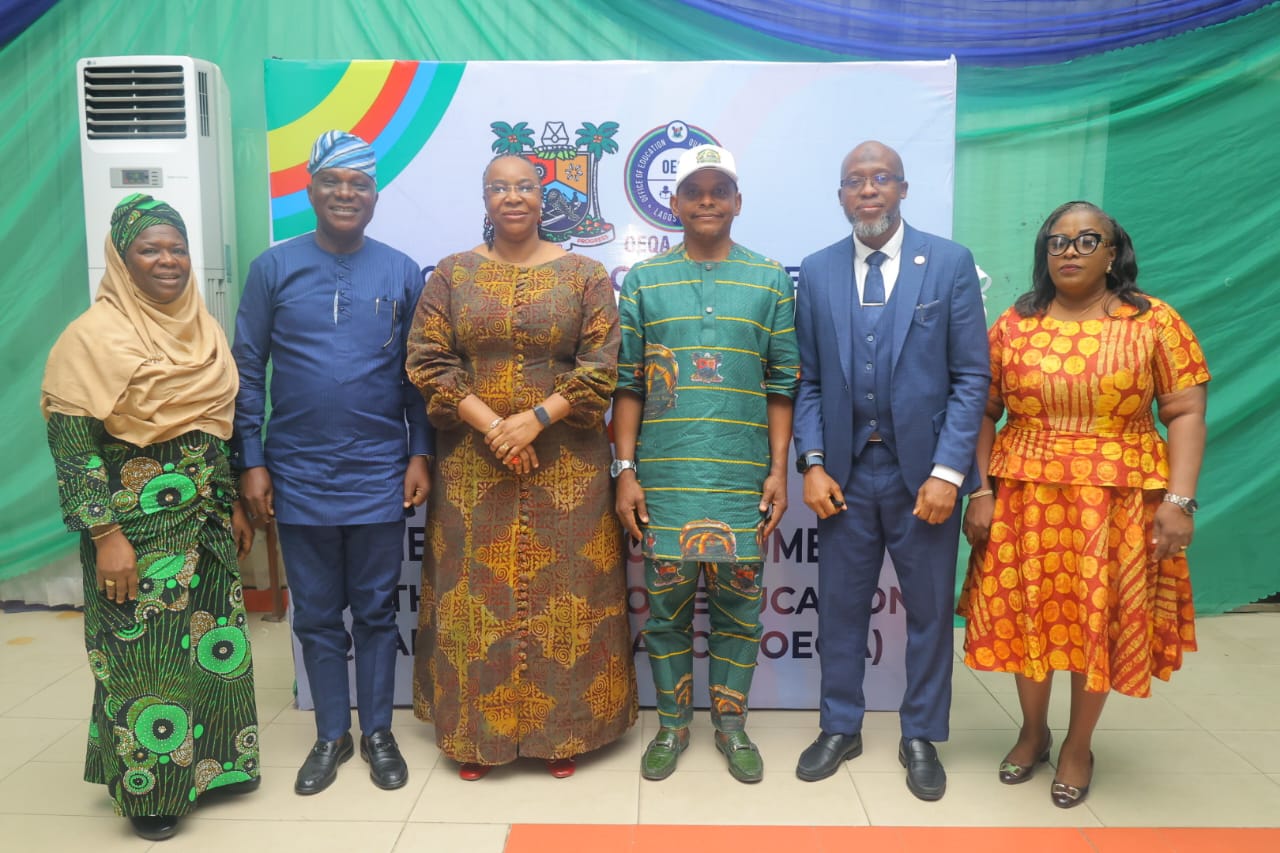
Lagos is positioning its education system for global competitiveness with a strategic plan rooted in the digitization of school registration and monitoring processes to enhance quality assurance, innovation, and accountability.
The Lagos State Government, through the Office of Education Quality Assurance (OEQA), formally unveiled the strategic blueprint at a ceremony held at the Lagos Chamber of Commerce and Industry (LCCI), Ikeja, setting the tone for a new phase of reforms in the state’s education sector.
Speaking at the event, the Commissioner for Basic and Secondary Education, Mr Jamiu Tolani Alli-Balogun, described the plan as a forward-looking policy aligned with the administration’s THEMES+ Agenda, expressing confidence in its capacity to transform the education landscape.
“This strategic plan represents a renewed OEQA – one that is more focused, more professional, and better positioned to collaborate with relevant stakeholders to improve learning outcomes and enhance teacher capacity,” he said.
He noted that the digitisation of private school registration would significantly reduce bureaucratic bottlenecks, limit human interference, and improve efficiency in regulatory processes.
“The automation of school registration will ease access, eliminate unnecessary delays, and ultimately raise standards across the education sector,” Alli-Balogun added.
The Commissioner emphasised that the initiative is geared towards building a system that is credible, transparent, and globally competitive.
“Our goal is to ensure that the future of education in Lagos is secure, credible, and able to compete with global standards,” he stated.
In her presentation titled “The Need for Strategic Planning in Public Sector Transformation,” the Permanent Secretary, Ministry of Basic and Secondary Education, Mrs Abisola Dokunmu-Adegbite, highlighted the broader impact of the initiative.
“This plan will drive standardised learning outcomes, strengthen school supervision systems, and establish robust accountability frameworks that will ensure continuous quality improvement,” she said.
She stressed that the framework was deliberately designed to reposition the sector through structured planning and data-driven decision-making.
“We are moving towards a system where policies are not just formulated but translated into measurable outcomes that directly impact teaching and learning,” she noted.
Earlier, the Director-General of OEQA, Dr Sulaimon Ogunmuyiwa, called for strong institutional support and staff commitment to ensure successful implementation of the plan.
“The success of this strategic plan depends largely on the buy-in of our staff and stakeholders. We must all work together to deliver on its objectives,” he said.
He explained that the plan simplifies the agency’s mandate with a clear focus on “Regulate, Evaluate, and Monitor to Improve Schools,” adding that collaboration with key Ministries, Departments, and Agencies (MDAs) would be critical.
“This framework is designed to make our processes more efficient, reduce manual operations, and strengthen our regulatory capacity,” Ogunmuyiwa added.
The Director-General further unveiled the SCRIPT framework, Staff Capacity, Collaboration, Revenue, Improved Governance, Professionalism, and Technology, as the operational backbone of the plan.
“Through the SCRIPT framework, we will enhance staff competence, strengthen partnerships, ensure transparency in revenue generation, and deploy technology to drive innovation in monitoring and evaluation,” he explained.
He disclosed that implementation had already commenced, with training programmes ongoing and automation processes being introduced to improve audit and monitoring systems across schools.
“We have begun the journey. Training is ongoing, and digital systems are being deployed to ensure effective oversight and improved service delivery,” he said.
