


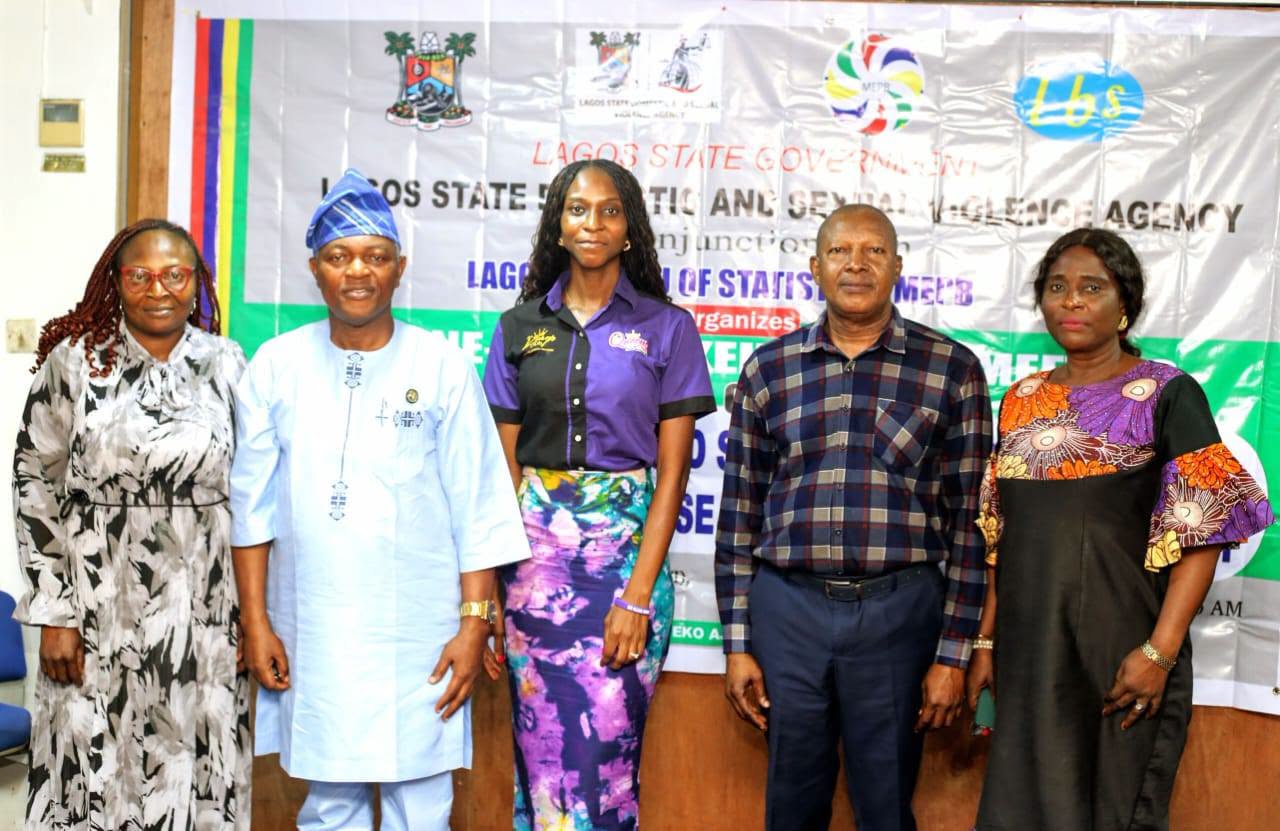
The Lagos State Government is seeking more reliable data on domestic and sexual violence to guide policy formulation, resource allocation and interventions aimed at protecting residents and supporting survivors.
The initiative was disclosed at a stakeholders’ engagement on the Survey on Domestic Violence and Sexual Harassment/Rape, Incidence Rate, Response Time and Government Policy, organised by the Lagos Bureau of Statistics (LBS) in collaboration with the Lagos State Domestic and Sexual Violence Agency (DSVA).
The engagement, held at the Lagos Chamber of Commerce and Industry, Ikeja, focused on generating data on residents’ experiences of domestic and sexual violence, their awareness of available support services and reporting mechanisms, as well as the effectiveness of government interventions.
Speaking at the event, the Permanent Secretary, Ministry of Economic Planning and Budget, Mrs Olayinka Ojo, said the survey was critical to strengthening evidence-based policymaking and ensuring that government interventions in social protection and gender-based violence remained responsive to residents’ experiences.
Ojo, who was represented by the Director, Lagos Bureau of Statistics, Mr Bashiru Oseni-Ope, said the survey would provide insights into residents’ awareness of available support services, confidence in reporting mechanisms and experiences with existing interventions.
She stressed that citizens’ feedback was essential to assessing the effectiveness of government policies and programmes and ensuring that public resources were directed towards areas of greatest need.
According to her, the Lagos State Government, under the leadership of Governor Babajide Olusola Sanwo-Olu, had continued to strengthen its social protection architecture and response to domestic and sexual violence through initiatives including the Protection Against Domestic Violence Law 2007, public awareness campaigns, the Virtual Referral and Response Service, and collaboration with civil society organisations, community leaders and development partners.
Ojo said it was important to continually assess the interventions from residents’ perspectives, particularly to determine whether people were sufficiently aware of available services, whether survivors were receiving the necessary support and whether reporting and response mechanisms were effective.
She explained that the survey would help identify gaps between government policies and public expectations, particularly in service awareness, confidence in reporting channels, prevailing social attitudes towards violence, and the reach and impact of government interventions at the grassroots.
The Permanent Secretary assured that the findings would be put to practical use, noting that the insights generated would inform the state’s planning and budgetary frameworks and guide future resource allocation towards residents’ needs, particularly in social protection and gender equality.
She called for sustained collaboration among government institutions, communities, civil society organisations and development partners, stressing that tackling domestic and sexual violence required a coordinated response.
Also speaking, the Executive Secretary, Lagos State Domestic and Sexual Violence Agency, Mrs Titilola Vivour-Adeniyi, described the survey as crucial to keeping stakeholders abreast of emerging trends in domestic and sexual violence and strengthening the data needed to design and improve interventions.
Vivour-Adeniyi said the collaboration between LBS and DSVA was aimed at generating reliable data on the prevalence of gender-based violence, patterns of occurrence and the channels through which survivors report cases.
She noted that domestic and sexual violence was driven by factors including patriarchy, gender inequality, socio-religious influences and harmful social norms, adding that the multifaceted nature of the challenge required a coordinated response from all stakeholders.
According to her, government, civil society organisations, religious institutions and community leaders had critical roles to play in addressing the challenge, while government must ensure the enforcement of relevant laws, formulate appropriate policies, provide support structures for survivors and ensure that perpetrators were held accountable.
Vivour-Adeniyi expressed optimism that the survey would generate data capable of revealing emerging trends and identifying areas of high prevalence across the local government areas, while providing evidence-based recommendations for preventing and mitigating sexual and gender-based violence in the state.
She urged survivors of domestic and sexual violence to speak up and seek help, assuring them that their experiences were valid and that they should not blame themselves for the violence they suffered.
The Executive Secretary explained that reporting cases would enable survivors to access critical services, including medical care, legal support and access to justice.
She encouraged members of the public, particularly survivors, to contact DSVA through its toll-free line, 0800 033 3333, for support and assistance.
Highlighting the objectives of the survey, the Director, Lagos Bureau of Statistics, Mr Bashiru Oseni-Ope, said the exercise was designed to generate reliable data on the incidence of domestic violence, sexual harassment and rape in Lagos State, while assessing residents’ awareness of available support services and reporting mechanisms.
He said the findings would support evidence-based policymaking, strengthen coordination among relevant stakeholders and assist the government in improving interventions designed to protect vulnerable residents and provide timely support to survivors.
Oseni-Ope stressed that reliable and credible data remained essential to understanding the scale and patterns of domestic and sexual violence, identifying gaps in existing responses and developing effective and sustainable solutions to the challenge.
The engagement was attended by representatives of relevant government agencies, civil society organisations, development partners and community stakeholders.
