


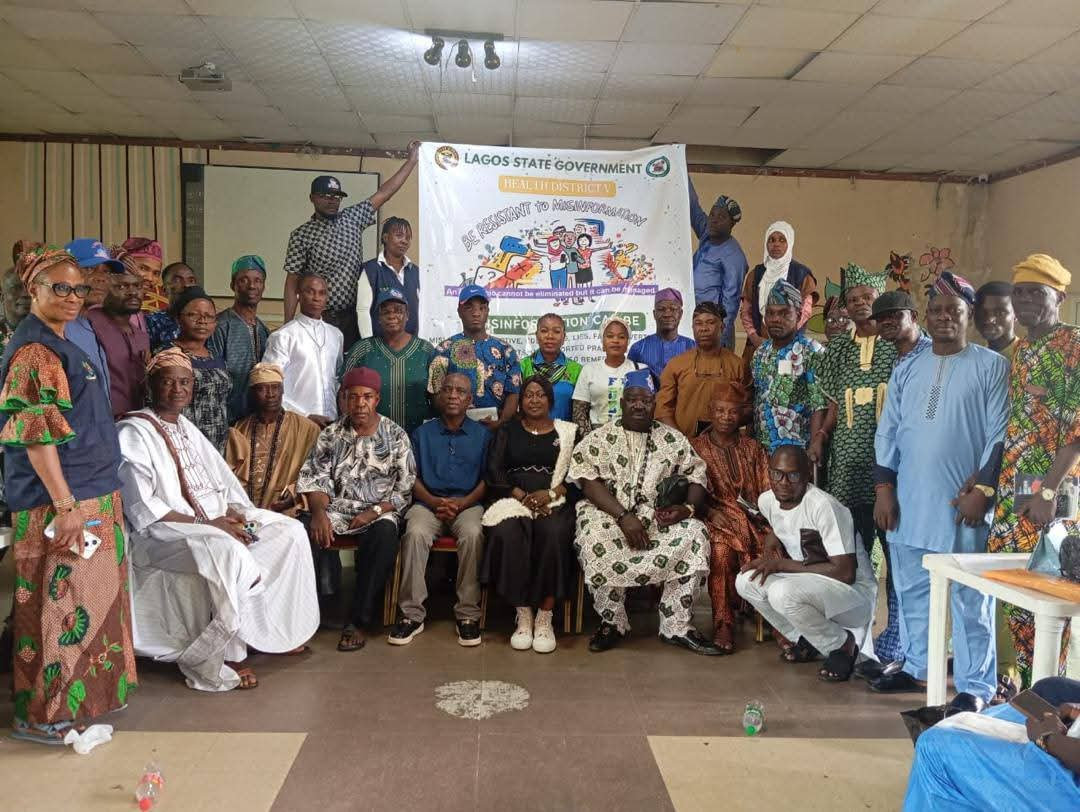
The Lagos State Government has urged residents to desist from spreading false or unverified health information, warning that such actions could endanger lives and disrupt public trust in the healthcare system.
The Permanent Secretary, Health District V, Dr. Oladapo Asiyanbi, gave the charge during a stakeholders’ engagement held at the Amuwo Odofin Local Government Multipurpose Hall.
Represented by the Director of Medical Services and Disease Control, Dr. Amina Ahmad Bello, Dr. Asiyanbi said the event was designed to sensitise residents on the dangers of health misinformation and to equip them with the skills to identify and share only credible health information.
According to him, the circulation of unverified messages, especially via social media platforms, has created unnecessary fear and confusion among the populace. “The Lagos State Government remains committed to ensuring that residents have access to accurate, reliable, and timely health information.
We urge the public to always confirm health-related updates from official government channels, recognised health institutions, or credible media outlets,” he said.
Also speaking, the Director of Health Education and Promotion Services, Mrs. Oguntona Elizabeth, advised community leaders and stakeholders to always verify information with health workers before acting on it.
She noted that platforms such as WhatsApp often serve as major channels for the spread of unverified health claims, stressing that stakeholders must help stop such trends.
As part of the engagement, stakeholders participated in practical sessions on how to combat health misinformation, with presentations delivered by Mr. Olusegun Badejo, the State Health Educator, and Mr. Abara Etim from Nigeria Healthwatch.
Badejo highlighted strategies for managing the “infodemic,” while Etim encouraged residents to become active defenders of truth by sharing only verified information and discouraging the spread of rumours within their communities.
The programme drew wide participation from community leaders, health workers, and civil society groups, underscoring the State Government’s continuous commitment to safeguarding public health through accurate information dissemination.
