


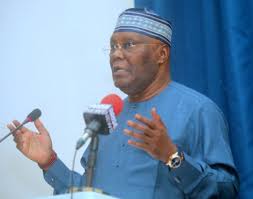
The Presidency has strongly rejected claims by former Vice-President Atiku Abubakar likening the administration of President Bola Ahmed Tinubu to military rule, describing the comparison as a distortion of history and an affront to Nigeria’s democratic experience.
The response followed comments by Atiku at the public presentation of The Loyalist, a book authored by the National Publicity Secretary of the African Democratic Congress (ADC), Bolaji Abdullahi, held in Abuja on Tuesday.
At the event, Atiku described the All Progressives Congress (APC)-led government as “the worst administration I have witnessed in nearly four decades of political life,” arguing that it had inflicted more damage on the country than military dictatorships prior to 1999.
“Not even the military dictatorships before 1999 damaged our national life and consciousness in the way this administration has done,” the former vice-president said.
Reacting on Wednesday, the Special Adviser to the President on Media and Communication, Mr. Sunday Dare, dismissed the remarks, saying they trivialised the suffering Nigerians endured under military regimes.
“It insults the memory of Nigerians who were jailed, exiled, or killed under decrees and firing squads so that men like Atiku could enjoy today’s freedoms,” Dare said in a post on his X handle.
He argued that Atiku’s portrayal of the present democratic government as tyrannical was contradicted by the freedoms he currently enjoys.
“The absurdity of Atiku’s ‘dictatorship’ narrative collapses under minimal scrutiny. In the same republic he brands tyrannical, he moves freely, convenes political meetings at will, grants interviews, and attacks the President daily under full constitutional protection,” Dare stated.
According to the presidential aide, such liberties were routinely extinguished under military rule.
Atiku, however, used the book launch to position the ADC as a platform for political realignment, describing it as a convergence of forces determined to rescue the country from what he termed an unprecedented governance crisis.
“We have a unique opportunity within the ADC as a political party — a convergence of various political leanings across the country, united in an effort to reunite Nigeria and renew our democratic journey,” he said.
He noted that many of those present at the event were involved in the formation of the APC but had since become disillusioned with its performance in government.
“Just as we once took responsibility to form a political alternative, we must again come together to ensure the emergence of a new political organisation capable of salvaging this country for the benefit of its people,” Atiku added.
Responding further, Dare dismissed the former vice-president’s criticism as post-election grievance, accusing him of repeatedly delegitimising democratic outcomes after electoral losses.
“To argue that a ballot-produced government is worse than one imposed by bullets is reckless and corrosive. It insults the legacy of June 12 and flirts dangerously with democratic sabotage,” he said.
Dare questioned whether Atiku believed his own rhetoric, suggesting that the former vice-president’s comments reflected frustration over declining political relevance.
“At this stage, Atiku Abubakar is less an elder statesman than a cautionary tale,” the presidential aide said, adding that Nigeria’s democracy had moved on despite persistent political dissent.
