


The Federal Government has suspended the proposed increase in registration fees for the 2027 West African Senior School Certificate Examination (WASSCE) and the National Examinations Council (NECO) Senior School Certificate Examination, following widespread opposition from stakeholders, including former Vice President Atiku Abubakar, the Nigeria Union of Teachers (NUT) and the National Association of Nigerian Students (NANS).
The suspension, announced on Monday by the Federal Ministry of Education, effectively withdraws the June 18, 2026 letter that communicated the proposed adjustment, pending broader consultations with stakeholders across the education sector.
In a statement signed by the ministry’s Director of Press and Public Relations, Boriowo Folasade, the Federal Government said the suspension was prompted by concerns and feedback from members of the public.
“The Federal Ministry of Education announced that the letter conveying the proposed fee adjustment, dated 18 June 2026, has been withdrawn to allow for a comprehensive review and broader consultations with all relevant stakeholders before a final decision is taken,” the statement read.
The ministry explained that the proposed review was informed by the rising cost of administering national examinations, noting that registration fees have remained largely unchanged over the years despite increasing operational expenses.
According to the ministry, the cost of logistics, security, printing of examination materials, deployment of technology, quality assurance and other essential services required to maintain the integrity of public examinations has risen significantly.
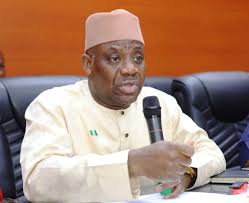
It added that the Minister of Education, Dr. Tunji Alausa, directed that the proposal be put on hold in line with the Federal Government’s commitment to transparent, inclusive and evidence-based policymaking.
“The Honourable Minister of Education, Dr. Maruf Tunji Alausa, CON, has directed that the proposal be placed on hold in line with the Federal Government’s commitment to inclusive, transparent and evidence-based policymaking,” the statement said.
The ministry stressed that the decision underscores the government’s commitment to ensuring that policies affecting students and their families are carefully considered and aligned with the public interest.
It disclosed that consultations would now be held with examination bodies, state ministries of education, school proprietors and administrators, parents’ associations, organised labour, education stakeholders and other critical partners before any decision is taken.
Consequently, the proposed review of examination registration fees will not take effect until the consultation process is completed.
The ministry reaffirmed that students’ welfare, equitable access to quality education and responsible policymaking remain central to the Federal Government’s education agenda, assuring Nigerians that the public would be kept informed throughout the consultation process.
The suspension comes weeks after the Federal Government approved a new uniform registration fee of ₦50,000 for candidates sitting the WAEC and NECO Senior School Certificate Examinations from 2027, representing an 82 per centincrease from the current fee of ₦27,500.
The proposal, which followed a request by WAEC for an upward review of examination fees, immediately sparked widespread criticism from education stakeholders and civil society groups.
Former Vice President Atiku Abubakar described the planned increase as insensitive to the prevailing economic hardship facing millions of Nigerian families, warning that the policy would further deny children from low-income households access to secondary education.
Similarly, the Nigeria Union of Teachers (NUT) urged the Federal Government to reconsider the decision, arguing that the proposed increase would place an unbearable financial burden on parents and could worsen school dropout rates across the country.
The National Association of Nigerian Students (NANS) also rejected the proposed fee hike, describing it as anti-student and calling on the government to prioritise policies that expand, rather than restrict, access to education.
Monday’s suspension is widely seen as a response to the sustained public opposition, with stakeholders now expecting the consultation process to produce a more balanced and affordable outcome for Nigerian students and their families.
